
Switching to a homemade dog diet can offer many benefits. But, it’s crucial to first visit your vet. They will make sure your dog’s diet is right for their age, size, and health.
Experts from the American College of Veterinary Nutrition and AKC’s chief vet stress the need for vet advice. This is to prevent harm, mainly for puppies and pregnant or nursing dogs.
Only 13 percent of dog owners keep to the original diet after a year. The Journal of the American Veterinary Medical Association found risks in many dog food recipes. So, it’s important to plan a diet that’s just right for your dog’s health.
The American College of Veterinary Nutritionists has a guide for pet owners. It’s called “Your Dog’s Nutritional Needs: A Science-Based Guide for Pet Owners.” You can also check out ChefPaw by Innovet Pet Products. It’s a Dog Food Maker that makes fresh, healthy meals in just 40 minutes.
Making sure your dog’s diet is balanced and fresh is key to their health. Stay updated, get professional advice, and use tools like ChefPaw to make it easier. This will keep your furry friend healthy and happy.
Quick Recommendation: Our blog is filled with tip on the balanced nutrition dogs need. If you are seeking a source of food made with fresh, whole ingredients for your pet, click to see our #1 Recommendation
Understanding Your Dog’s Nutritional Needs
Your furry friend’s nutritional needs are as complex as ours. Dogs, being omnivores, get what they need from plants and animals. It’s crucial to give them the right mix for their health. The Association of American Feed Control Officials (AAFCO) sets guidelines for pet food, helping you choose the best diet for your dog.
A balanced diet for dogs includes proteins, fats, carbs, vitamins, and minerals. Proteins help with growth and repair, with AAFCO recommending at least 22% for puppies and 18% for adult dogs. Fats, the most calorie-rich, support heart and brain health.
Carbohydrates are key for energy, with grains like barley and brown rice being common sources. Cooked carbs are better for dogs than raw ones, as they avoid bacterial risks. Vitamins and minerals are also vital, supporting body functions and energy.
Your dog’s nutritional needs change with age, breed, and health. Puppies, adult dogs, and seniors have different needs. Regular vet visits can help find the best diet for your dog, keeping them healthy and happy.
Benefits of a Homemade Diet
When you make your dog’s meals at home, you pick the ingredients. This means they are always fresh and of the best quality. This control is key for better digestion and nutrient absorption.
By making meals at home, you can adjust them to fit your dog’s health needs and likes. This can improve their health, reduce digestive problems, and make their life better.
Homemade dog food helps manage allergens well. It’s vital for dogs with certain food sensitivities. It also lowers the risk of heart disease, high blood pressure, and obesity in dogs, just like in humans who eat home-cooked meals.
By cooking at home, you cut down on fat, salt, and sugar in your dog’s diet. These are often found in commercial dog food.
Another big plus is saving money. Making your dog’s meals at home can be cheaper than buying special commercial diets. It also lets you control how much food your dog eats, preventing overeating.
Lastly, cooking at home makes meals safer for your dog. It reduces the risk of foodborne illnesses, making sure your dog’s food is both safe and healthy.
Essential Protein Sources for Dogs
It’s key to make sure your dog gets enough protein for their health. Lean meats like chicken, turkey, beef, and lamb are great. They have amino acids for muscle repair and growth. Chicken is affordable and fits many diets, while turkey helps keep muscles healthy.
Beef is also good for your dog, packed with iron and zinc for energy and immune health. Lamb is more expensive but easy to digest, good for sensitive dogs. Fish like salmon and whitefish are great for skin and coat health because of omega-3 fatty acids.
There are also plant-based proteins for dogs. For example, half a cup of cooked soy has about 11 grams of protein. A cup of quinoa has 8.14 grams. These are good for dogs with allergies or special diets.
Adding treats like Dogsee Puffed Bars, with 60% protein, and Puffies training treats, high in protein and calcium, can help. They give energy and keep your dog’s weight in check. These treats can add to your dog’s protein intake.
How you cook matters too. Poaching, slow cooking, or baking keeps nutrients and helps digestion. Avoid harmful ingredients like onions to keep meals safe. Cooking at home lets you control the quality of your dog’s protein diet.
Mixing different protein sources meets your dog’s needs and keeps them healthy. It ensures they get a balanced, nutritious diet that supports their growth and health.
Quick Recommendation: Our blog is filled with tip on the balanced nutrition dogs need. If you are seeking a source of food made with fresh, whole ingredients for your pet, click to see our #1 Recommendation
Choosing Fresh Ingredients
When picking ingredients for your dog’s diet, quality and freshness are crucial. Look for ingredients from trusted sources. This ensures your dog gets balanced nutrients.
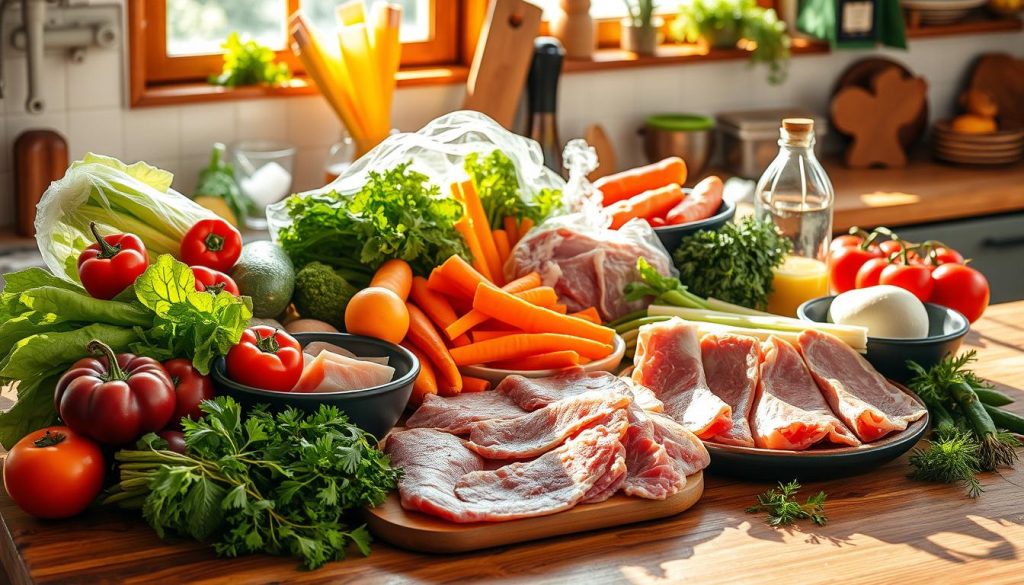
Fresh produce like apples, mangoes, broccoli, spinach, and carrots are full of nutrients. Buying from local farmers’ markets means you get produce at its peak. This usually means higher nutritional value.
For proteins like fish or meats, choose fresh. Local butchers often have better meat than grocery stores. This ensures your dog gets the best quality.
Using your senses is key when checking for freshness. For meats, a dark color in beef or bruising in poultry means spoilage. Bright, clear eyes in seafood show it’s fresh.
Fresh ingredients are also safer for your dog. Bacteria can grow quickly if food sits out for too long. So, picking fresh ingredients keeps your dog healthy and safe.
Buying fresh also helps your community. It supports local farmers and businesses. This creates jobs and strengthens your community, making it more connected and sustainable.
The Role of Fats and Fatty Acids
Fats are key for your dog’s health. They give more energy than proteins or carbs, with nine calories per gram. They also make dog food taste better, helping your pet eat more.
Essential fatty acids like omega-3 and omega-6 are vital for your dog’s cells and skin. Omega-3s, found in fish oil and flaxseed, help fight inflammation and boost the immune system. Omega-6, in plant oils like canola and sunflower, keeps the skin and coat healthy.
It’s crucial to have the right mix of fats in your dog’s diet. This prevents diseases and keeps them healthy. The American Heart Association says fats should be 8-10% of daily calories for heart health.
Fats in the right amount are not just good, they’re necessary. They help your dog absorb vitamins A, D, E, and K. They also make dog food more appealing, so your pet enjoys eating.
Adding quality fats like fish oil, flaxseed, and canola oil to your dog’s diet can make their coat shiny and skin healthy. It also strengthens their immune system. By knowing the role of fats and fatty acids, you ensure your dog stays vibrant and healthy.
Transitioning to a Homemade Diet
Starting your dog on homemade food can be a great experience for both of you. But, it’s important to do it slowly to prevent upset stomachs. First, talk to a nutrition expert to make sure the food fits your dog’s needs.
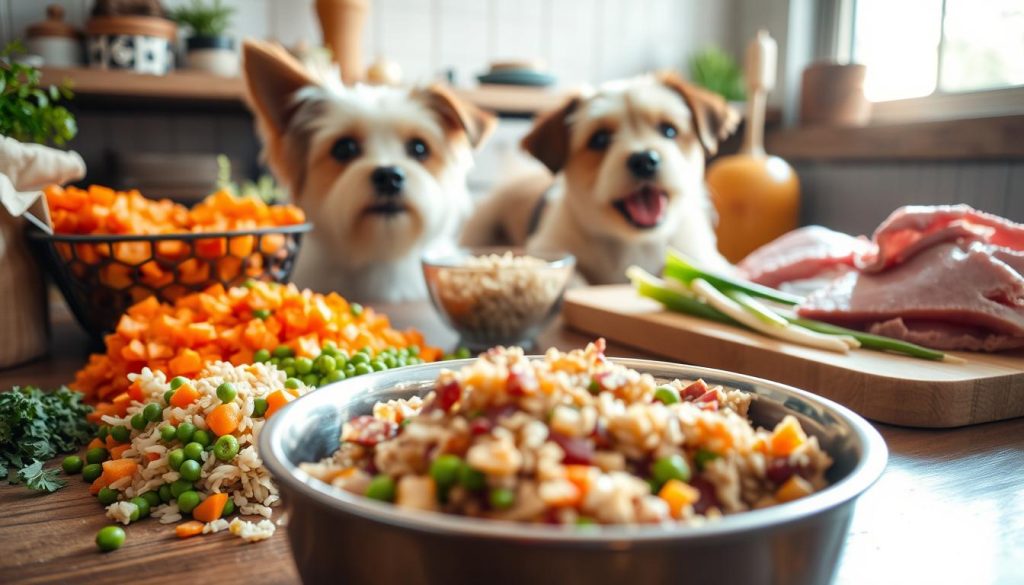
Begin by mixing 25% of homemade food with their old food on the first day. After two days, increase it to 50%. Then, go to 75% after another two days. By day seven, they should be eating only homemade food.
Don’t rush this process. In most cases, a slow transition is best. It gives your dog’s stomach time to get used to the new food.
Stick to the diet transition tips to keep the food balanced. Don’t swap out ingredients in recipes. You can also tailor the recipes to your dog’s age, weight, and health needs. This way, you have more control over what they eat.
Keep an eye on your dog’s weight and health during the transition. If you notice any big changes, talk to your vet. This ensures your dog is doing well on their new diet.
Common Mistakes to Avoid
When making safe homemade dog food, it’s key to steer clear of common mistakes. One big error is using ingredients that are bad for dogs. Foods like onions, garlic, and chocolates are toxic and should never be in your dog’s food.
Another mistake is not balancing protein, fats, and carbs correctly. Many owners focus too much on meat and forget about veggies and grains. This can cause health problems in your dog.
Not following vet-approved recipes is another big mistake. Changing recipes without knowing what you’re doing can lead to a diet lacking in important nutrients. Always check with your vet to make sure your dog’s diet is balanced and complete.
Also, keeping things clean is crucial. The CDC says washing fruits and veggies well and washing your hands properly can prevent foodborne illnesses in pets. Washing your hands for at least 20 seconds with soap and warm water can greatly reduce the risk.
Remember, avoiding these mistakes is possible if you’re careful when making homemade dog food. By following these tips, you can give your dog a healthy and safe diet.
Resources for Dog Diet Recipes
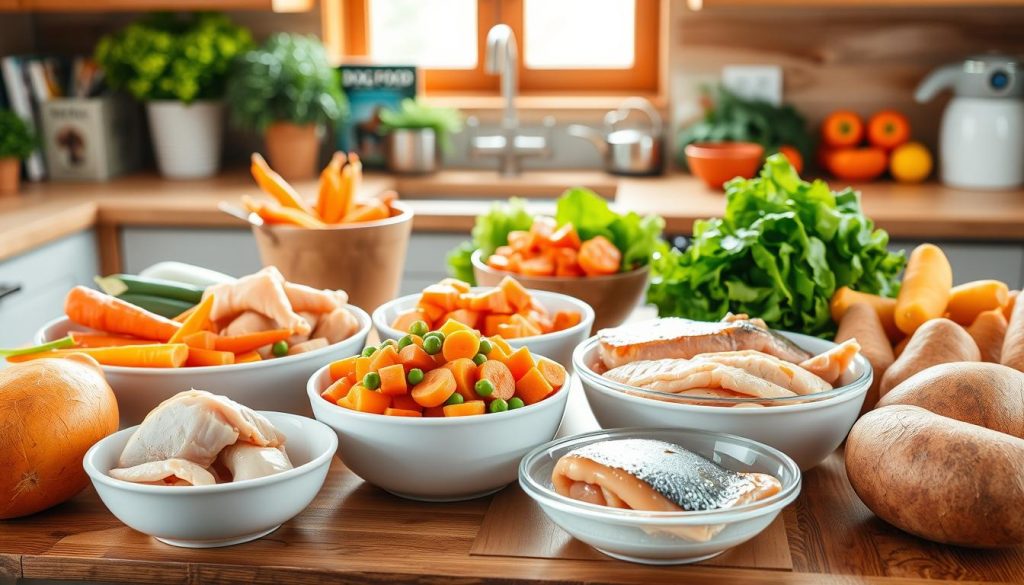
Looking for reliable homemade dog food resources is key when making a diet for your pet. Talking to a vet nutritionist can give you advice and recipes that fit your dog’s needs. Sites like the American College of Veterinary Nutritionists and ChefPaw offer vet-approved meal plans.
A recipe might include 7 lbs of lean ground beef, 1.5 cups of hempseeds, and 16 oz of sardines. It also has 4 tsp of ground ginger, 4 tsp of kelp powder, 8 eggs, 4 eggshells, and 15 oz of pumpkin puree. Plus, 8 oz each of beef liver, broccoli, red bell pepper, and spinach. This mix ensures your dog gets all the nutrients they need.
Balance It is a trusted source, loved by over 20,000 vets for recipes and meal prep. Their Recipe Builder creates trillions of recipes that meet FDA and AAFCO standards. Balance It makes sure every recipe has all the essential nutrients, making it a top choice for homemade dog food.
This recipe has about 40 calories per ounce, with a serving size of 2/3 cup twice a day for a 10-pound dog. The ingredients are packed with benefits like amino acids from ground beef for muscles, omega-3 from sardines for a shiny coat, and antioxidants from ginger and cranberries for good digestion and health.
You can freeze the homemade dog food for weeks or keep it in the fridge for up to 4 days. If you want a flexible diet that meets your pet’s health needs, Balance It and vet consultations are great. This personalized nutrition approach improves your dog’s health and gives you peace of mind.
Conclusion
Creating a healthy dog diet is more than just mixing different foods. It’s about picking fresh, high-quality ingredients. These ingredients offer more vitamins and nutrients than processed foods.
Buying from local farmers helps your community and ensures fresh ingredients. These are often free from harmful additives and pesticides.
Knowing what your dog needs is key. Adding fresh proteins and veggies boosts their immune system. Fresh fruits and veggies also help with digestion, making it easier for them to get the nutrients they need.
Starting a homemade diet might seem hard, but it’s doable with the right help. Working with vets and using trusted recipes makes sure your dog’s meals are tasty and healthy.
Remember, fresh ingredients are good for your dog’s health and make mealtime fun. By choosing fresh ingredients, you’re helping your dog stay healthy for a long time.
Quick Recommendation: Our blog is filled with tip on the balanced nutrition dogs need. If you are seeking a source of food made with fresh, whole ingredients for your pet, click to see our #1 Recommendation