

Many dog owners are now making their pets’ food at home due to concerns about commercial pet food recalls. This guide will show you how to prepare healthy meals for your dog. It covers the basics of choosing ingredients and balancing proteins, carbs, and veggies for your dog’s diet. Always talk to a vet before starting a homemade diet to keep your dog healthy.
A study found that almost 95% of homemade dog food recipes online or in books are not fully balanced. So, it’s key to measure ingredients carefully, as they can shrink when cooked. Using different proteins like chicken, beef, and lamb, and adding veggies like carrots, green beans, and spinach, can give your dog a wide range of nutrients.
Introduction to Home-cooked Dog Meals
More and more pet owners are choosing homemade dog food. This is because of recalls of commercial pet food and a desire for fresher, less processed meals. To start cooking for dogs, it’s important to know what foods are safe and healthy for them.
Homemade dog food is packed with protein, veggies, and healthy grains. These ingredients can greatly improve a dog’s health and life. Dogs should eat 1 cup of food for every 20 lbs of their weight. The right amount depends on their weight, age, breed, and health.
Cooking for dogs can prevent many health issues like allergies, arthritis, diabetes, and stomach problems. Lean chicken and turkey, along with whole grains like brown rice or quinoa, are great alternatives to traditional dog food. An adult dog’s diet should have a mix of 1/4 protein, 1/4 veggies, and 1/4 grains.
Recipes like Chicken & Rice Comfort Dinner, Beef & Veggie Mash, Turkey and Quinoa Delight, and Fish & Parsley Pot are popular. They aim to provide a balanced mix of proteins, carbs, fats, vitamins, and minerals. Always talk to a vet or pet nutritionist before changing your dog’s diet.
Essential Ingredients for Homemade Dog Food
Making healthy dog meals means using top-notch ingredients. Proteins like chicken, turkey, and beef are key. Carbohydrates such as rice and potatoes are also important. Don’t forget vegetables like carrots and peas.
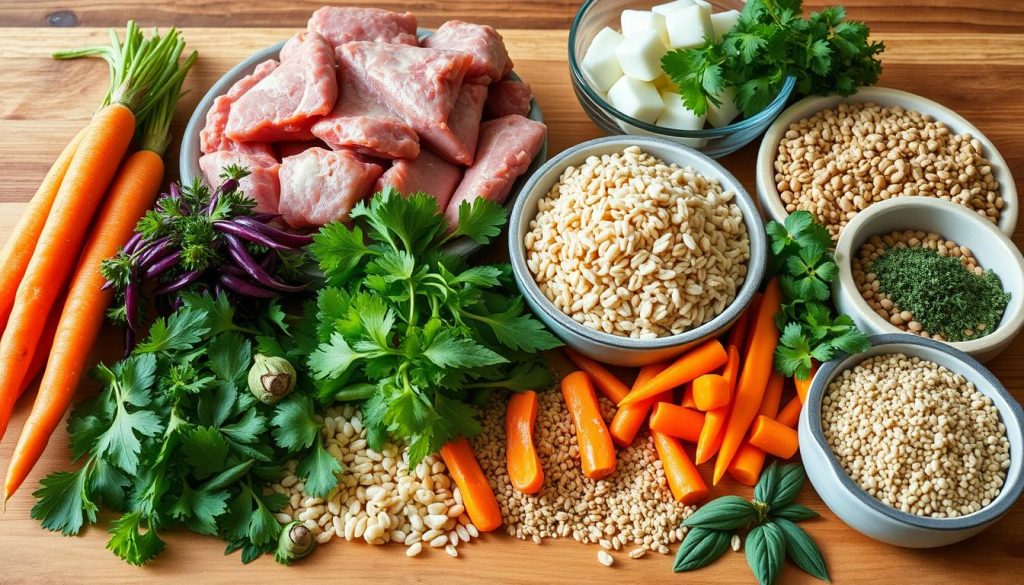
It’s crucial to mix these ingredients right. Aim for 40% protein, 50% veggies, and 10% starch. But, your dog’s needs might differ, so listen to your vet.
The University of California, Davis, found most dog foods lack essential nutrients. So, choose your ingredients carefully.
Minerals like calcium and iron are vital for dogs. Water is also essential, as dog food can’t provide enough. Make sure your dog always has clean water.
ChefPaw by Innovet Pet Products has a Dog Food Maker. It makes fresh dog food in just 40 minutes. This saves time while keeping your dog healthy. Always get advice from a pet nutritionist to avoid diet problems.
Popular Dog Meal Prep Recipes
Making pet food at home lets you pick the best ingredients for your dog. You can mix lean meats like turkey with veggies and grains like brown rice. This way, your dog gets balanced and tasty meals.
A favorite recipe is cooked turkey with carrots, peas, and brown rice. Adding a vet-recommended supplement makes sure meals are complete. Another good choice is ground beef with sweet potatoes and steamed broccoli, seasoned with safe herbs.
For a balanced meal, use half meat, a quarter low-lectin carbs, and a quarter fruits and veggies. Healthy oils and herbs can add flavor and nutrition. Even though it might be more expensive, these cooked meals are a healthy alternative to raw diets.
Batch cooking for your dog every 2-3 weeks is easy. Just cover the food with water, cook until veggies are tender, and freeze. Sweet potatoes, broccoli, and meats are great for a complete meal. Remember, adding supplements like Nutra Thrive™ can help make sure your dog gets everything they need.
More people are choosing homemade pet food recipes. It’s not just about controlling what goes into your dog’s meals. It’s also because of concerns over commercial pet food recalls. With the right recipes and vet advice, you can give your dog meals that are both healthy and tasty.
Transitioning Your Dog to Homemade Meals
Switching your dog to homemade meals needs careful planning. Start by mixing a little of the new food with their old food. Gradually add more homemade food each day.
Begin with 25% homemade food and 75% old food on day one. By day four, aim for a 50/50 mix. Increase the homemade food to 75% by day six. This slow change helps your dog’s stomach adjust.

Watch your dog closely during this time. Their stool should stay firm and normal. If they have diarrhea or vomiting, slow down the change and talk to your vet. This way, you can adjust the meal plan as needed.
It’s also key to make sure the homemade meals are balanced. Fresh food is more digestible than dry food. A vet or canine nutritionist can help with the right mix of nutrients. They can also suggest supplements if needed.
Make big batches of food and store them in airtight containers or freezer bags. Use labels with the date and your dog’s name. Homemade dog food can stay in the fridge for 2-3 days or longer in the freezer.
After switching, keep an eye on your dog’s health for 3-6 months. Regular weigh-ins and bloodwork might be needed. This ensures the new diet is working well for them.
Tips for Effective Dog Meal Prep
Effective dog meal prep means several key strategies. It ensures your dog gets fresh, nutritious, and balanced meals. Fresh food diets are up to 40% more digestible than dry food. This lets your dog absorb more nutrients.
Preparing meals in bulk saves time. You can spend just a few hours on the weekend. This makes meal prep easier and more efficient.
When preparing meals, plan portions based on your dog’s size and energy needs. This prevents overfeeding and ensures they get the right amount of nutrition. Use food scales or measuring cups for accurate measurements. Store portions in airtight containers to keep them fresh.
Using a food processor for mixing ingredients is helpful. It saves time and ensures meals are consistently nutritious. This is especially useful when preparing large quantities.
Purchasing ingredients in bulk is more cost-effective. Meal prepping also reduces food waste. It helps you use ingredients more efficiently.
Always practice good kitchen hygiene to prevent contamination. This is crucial when handling foods dangerous to dogs, like onions and chocolate. Meal prepping lets you plan meals in advance. This ensures a balanced and nutritious diet for your dog.
Meal prepping is convenient, especially for busy schedules. It allows for grab-and-go meals. A good method for thawing frozen dog food is 24 hours for every 5 pounds in the fridge. This ensures meals are ready and safe for your dog.
Ingredients to Avoid
When cooking for your dog, it’s important to know what not to use. Foods like onions, garlic, grapes, and chocolates are bad for them. They can cause serious health problems.
Preservatives like BHA, BHT, Ethoxyquin, and Nitrates/Nitrites are harmful. They can raise the risk of cancer and liver damage. Avoid Propyl Gallate, Carrageenan, and MSG for a better diet.
Artificial ingredients like corn syrup and food colorings can cause hyperactivity and allergies. Processed fats and propylene glycol are also risky. They can harm your dog’s skin, liver, and kidneys.
Xylitol, found in sugar-free products, is very dangerous for dogs. It can lead to life-threatening low blood sugar. Melamine, used to fake protein, can cause kidney failure.
To keep your dog safe, always check food labels. Talk to your vet about safer options.
Benefits of Home-cooked Dog Food
Home-cooked dog food offers many benefits for your pet’s health. You can choose the best ingredients for your dog. This ensures they get a diet that meets their nutritional needs perfectly.
One key advantage is better digestion. Fresh ingredients are gentler on your dog’s stomach than some commercial foods. This can improve how well your dog absorbs nutrients and keep their gut happy.
Homemade meals also help with allergies. Many dogs have sensitivities to ingredients in commercial foods. By making your own food, you can avoid these allergens and choose safer, healthier options.
Managing your dog’s weight is easier with homemade meals. You can control the portion sizes and ingredients. This is crucial for dogs at risk of obesity or other health issues.
Lastly, making your dog’s food at home brings joy and satisfaction. It strengthens your bond with your pet. Plus, you’ll have peace of mind knowing what they’re eating.
Consult with Your Veterinarian
Before changing your dog’s diet, it’s crucial to get advice from a vet. Over 20,000+ vets trust them. They ensure your homemade meals are balanced and meet your dog’s health needs.
Every dog is different, needing a diet based on their age, health, and activity. A vet can give you recipes, suggest supplements, and adjust portions. This makes a diet that’s just right for your dog.
An expert, like a board-certified veterinary nutritionist, can help a lot. They use advanced Recipe Builders to create diets. These tools meet FDA and AAFCO standards, ensuring each recipe is safe and balanced.

Talking to a vet also helps with vitamins and minerals. They’ll tell you about important supplements like calcium. They’ll also advise on avoiding foods that could harm your dog, like spinach.
Food labs can check your homemade meals for nutrients. Regular vet visits and blood tests are also key. They help keep your dog’s diet on track.
Getting advice from a vet nutritionist can improve your dog’s health. They can help with better hair, skin, and energy. Having the right advice ensures your dog gets a balanced meal every time.
Conclusion
Starting to make homemade meals for your dog is a great choice. It can greatly improve your pet’s health. This effort shows how much you care for your dog. We’ve covered the key points and tips to help you succeed in this journey.
Choosing the right ingredients is key for your dog’s health. Use fresh veggies, lean meats, and supplements. Avoid harmful foods like onions and garlic. Make sure their diet includes important nutrients like calcium and vitamin E.
It’s important to work with your vet to create a diet plan for your dog. They can help make sure the meals are right for your pet’s needs.
Organizing your meal prep is important for saving time. Prepare veggies a day early and freeze portions for up to a week. Start with simple recipes and gradually get more complex. This will help you and your dog.
Remember to always check with your vet before changing your dog’s diet. They can offer advice and help keep your dog healthy. With these tips, you can give your dog meals that are both tasty and nutritious.