

In recent years, more pet owners are choosing fresh food for their dogs. This change is partly due to pet food recalls and a growing interest in nutritional wellness. Pet owners are turning to home-cooked meals to improve their dogs’ health and happiness.
Vetster notes that feeding dogs fresh food is more than a trend. It’s a smart choice for their overall health.
In this article, we explore the benefits of fresh food for dogs. You’ll learn how to pick the best ingredients and switch from kibble to home-cooked meals. Our aim is to help you improve your dog’s health with a nutritious diet.
Understanding the Benefits of Fresh Food for Dogs
As dog parents, we always want the best for our furry friends. Their diet is a key aspect to consider. Fresh food is gaining popularity for its many benefits over traditional dog food.
Commercial dog food meets USDA standards but may not offer the variety of nutrients and taste that fresh food does. Fresh food delivery services, like Ollie, create personalized meals for your dog. These meals are made from high-quality, human-grade ingredients and are vet-approved.
One of the main advantages of fresh food is its nutritional value. Ingredients like apples, bananas, and beef are full of vitamins and minerals. For example, blueberries are rich in vitamins C, K, and A, which can help prevent diseases.
Mealtimes can be more enjoyable for dogs with fresh food. The varied textures and flavors can make them happier. A fresh diet can also lead to a shinier coat, healthier skin, and better brain function.
However, it’s important to follow veterinary advice on fresh food diets. The University of California, Davis found that 95% of homemade diets are not balanced. Always consult a vet or pet care professional to ensure your dog’s diet is complete.
Choosing the Right Ingredients
When it comes to Dog Nutrition, picking Healthy Ingredients is key. A good diet for dogs should have proteins, vegetables, and carbs. Proteins from animals like beef, turkey, and chicken are great. They give dogs amino acids they can’t make on their own.
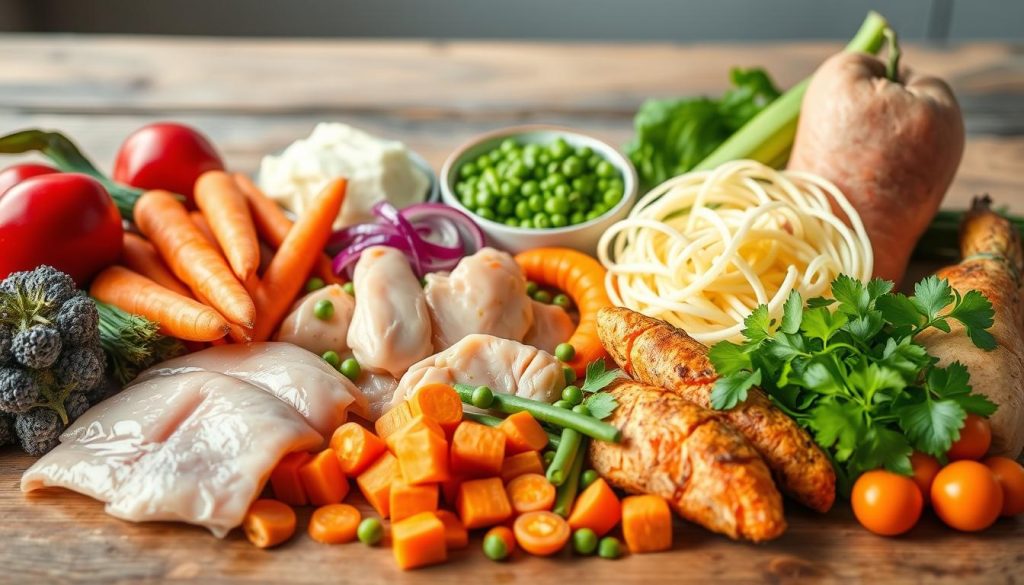
Vegetables like carrots and green beans add fiber and nutrients. Carbs from rice and potatoes help with energy and digestion. Even though dogs don’t need carbs, they still help.
But, it’s also important to know what to avoid. Foods like chocolate and grapes are toxic. A balanced diet is essential for your dog’s health. Always talk to a vet to make sure your dog’s diet is right.
Transitioning from Store-Bought to Home-Cooked Meals
Transitioning to Home-Cooked Dog Food needs careful planning. It’s important to make the switch slowly to avoid upset stomachs. This ensures your dog adjusts well.
Here’s a detailed day-by-day plan:
- Day 1: Mix 20% of Home-Cooked Dog Food with 80% of the old food. Monitor for any adverse reactions.
- Day 2: Increase to 40% Home-Cooked Dog Food and reduce store-bought food. Continue to watch for any symptoms of discomfort.
- Day 3: Adjust the mix to 50% new and 50% old. Ensure your dog is reacting positively to the Dietary Changes.
- Day 4: Change to a 60-40 ratio, gradually increasing the Home-Cooked Dog Food proportion.
- Day 5: Move to 80% Home-Cooked Dog Food and 20% store-bought food. Keep a close eye during this significant increase.
- Day 6: Transition fully to 100% Home-Cooked Dog Food if your dog shows no signs of discomfort.
During the transition, watch your dog for signs of allergies or digestive problems. Adding ingredients like eggs, cooked salmon, and leafy greens can be good. But, always check with your Veterinarian to make sure the food is right for your pet.
Also, weigh your dog regularly. This helps track any weight changes during the Dietary Changes.
Dog Wellness Tips: The Importance of a Balanced Diet
It’s vital to make sure your dog eats a balanced diet. This means they need the right mix of proteins, carbs, and veggies. Proteins help build and fix cells, while fats are key for hormone production and vitamin absorption. A good diet should have about 40% protein, 30% carbs, and 30% fats and veggies.

A balanced diet boosts your dog’s energy, makes their coat shine, and improves digestion. It also strengthens their immune system. But, a bad diet can cause obesity, allergies, and digestive problems. Getting advice from a vet can help make sure your dog gets the nutrients they need.
Preventative care is also crucial. A balanced diet and vet advice can stop many health issues. Always talk to a pet nutritionist or vet to create a diet plan that fits your dog’s needs. This way, you can keep your pet healthy and happy for a long time.
Monitoring Your Dog’s Health
It’s key to watch your dog’s health closely. Regular vet visits, once a year, help spot problems early. These visits keep vaccinations current, which fights off diseases.
Wellness tests during these visits can find hidden health issues. This ensures your pet gets the care they need, leading to a longer, healthier life.
At home, you should also monitor your dog’s health. Dr. Julie Buzby suggests a weekly five-minute check. Look for lumps, skin changes, or signs of pain in key areas.
Daily exercise is vital for your dog’s health. It prevents obesity and chronic diseases. Activities like walks and playtime boost heart health and muscle strength.
Regular socialization with other dogs also improves mental health and behavior. This is crucial for your dog’s overall well-being.
Don’t forget to use monthly preventatives for heartworm, fleas, and ticks. Good dental care, like brushing and professional cleanings, prevents oral diseases.
By following these steps, you can keep your dog healthy and happy. Exercise, vet visits, and health checks are essential for a balanced approach to your dog’s health.
Incorporating Fresh Food Add-Ins
Adding fresh foods to your dog’s diet can be a great way to boost their nutrition. Many pet owners add things like cooked salmon, mixed veggies, and cottage cheese to their dog’s kibble. These extras not only add variety but also provide important nutrients.

Cooked salmon is full of EPA/DHA, which is good for your dog’s skin and coat. You should give 3 to 10 mg of EPA/DHA for every pound of your dog’s weight. Mixed veggies like carrots and green beans are also great, offering fiber and vitamins.
When it comes to cottage cheese, choose the plain, low-fat kind. It’s a good source of calcium that’s easy on your dog’s stomach.
But remember, don’t overdo it with the add-ins. They should make up no more than 25% of your dog’s daily calories. Healthy treats like fresh fruit are okay in small amounts. Dogs love bananas, apples, melons, and blueberries, but they do have sugar.
For nutritional supplements, plain canned pumpkin is a good choice. Give 1 teaspoon for every 10 pounds of your dog’s weight to help with digestion. Always remember, add-ins should be part of a balanced diet, not the main thing.
Special Considerations for Puppies and Senior Dogs
Caring for puppies and senior dogs needs a special touch. Puppies need a diet that supports their bone growth. A balanced, age-appropriate diet is best, including puppy food.
Senior dogs face different challenges as they age. Dogs over seven years old need a diet that suits their lower activity and health issues. Foods rich in omega-3 fatty acids and glucosamine help manage these problems.
Regular vet visits are key for senior dogs. They should see the vet at least once a year, and more often if they’re older. Blood and urine tests help catch illnesses early. Watching their water intake and weight is also important.
Keeping them active but gentle helps their joints. Mental games also keep their minds sharp. A good diet supports their heart and may lower cancer risk.
Common Mistakes to Avoid When Feeding Fresh Food
Feeding your dog fresh food can be very beneficial. But, it’s important to avoid some common mistakes to keep your dog healthy.
One key tip is to keep their diet consistent. Many pet owners change their dog’s food too often. This can upset their dog’s stomach. It’s best to slowly introduce new foods and watch how your dog reacts.
It’s also crucial to watch out for allergens. Some dogs can be allergic to certain ingredients in homemade food. Always talk to your vet before adding new foods and consider an allergy test.
Making sure your dog gets all the nutrients they need is vital. A study found only nine recipes out of 200 met all the necessary daily nutrients. Foods often lack omega-3, calcium, and probiotics. Adding supplements like vitamins and minerals is important to avoid deficiencies.
Working with a vet who knows about dog nutrition can help a lot. They can create a diet plan that fits your dog’s needs, like their age and health. Regular vet visits can help keep your dog healthy and balanced.
Every dog is different, especially when it comes to their nutritional needs. Dogs with sensitive stomachs might do better with smaller, more frequent meals. Following these tips can help you give your dog the best care possible.
Maintaining a Healthy Feeding Routine
It’s important to have a regular feeding schedule for your dog’s health. Make sure they eat at least two meals a day, 12 hours apart. This helps avoid stomach problems that cause nausea. A steady diet also helps with house training and good eating habits.
Getting advice from vets or dog trainers can help. They can give you tips for a feeding plan that fits your dog’s needs. Good nutrition, exercise, and yearly check-ups are key to keeping your dog healthy. Using puzzle toys or slow feeders can make mealtime more fun and help digestion.
Sticking to a regular feeding schedule helps your dog’s digestion and keeps them at a healthy weight. Use food toys to make meals interactive and control calories. This keeps your dog both physically and mentally active.
Every dog benefits from a consistent diet, no matter their age. Adult dogs do well with two or three meals a day. Puppies might need more. Keeping a regular schedule is crucial for your dog’s best health.
By following these tips and keeping a regular feeding schedule, you meet your dog’s needs. This improves their life quality greatly.
Conclusion
Switching to a fresh food diet can greatly improve your dog’s health and happiness. It leads to better digestion, more energy, and a shiny coat. This is key for Optimal Dog Health.
A balanced diet is essential for Lifetime Pet Care. It meets your dog’s nutritional needs that kibble might not. This ensures they get all the nutrients they need.
Choosing fresh food strengthens your bond with your dog. It shows you care about their wellness. Regular health checks and vaccinations help catch problems early.
Don’t forget about exercise, dental care, and parasite prevention. These are important for your dog’s well-being. They help keep your dog happy and healthy.
Learning about your dog’s nutrition and health is important. It helps prevent serious illnesses and saves money in the long run. This commitment makes your dog’s life full of joy and vitality.