

Looking to better your dog’s diet? Fresh food is a great place to start. Many dog owners have moved to fresh food diets for their pets. This change can greatly improve your dog’s health, offering a balanced diet tailored to their needs.
It’s key to know which human foods are safe and good for your dog. Dogs, like humans, are omnivores. They can eat foods from both animals and plants. But, not all human foods are safe for them. It’s important to pick foods that are healthy for dogs and avoid harmful ones.
Brands like Hill’s Science Diet and Purina offer high-quality dog food. They make their food based on guidelines from the Association of American Feed Control Officials (AAFCO). This ensures their food has the right nutrients for dogs, like water, carbs, vitamins, and proteins.
Cooked, unseasoned chicken and turkey are great protein sources for dogs. They provide balanced nutrition without extra additives. For growing puppies and active dogs, the right amount of protein is crucial. Also, adding fresh veggies like carrots and green beans can give them extra vitamins and fiber.
Ready to explore fresh food for your dog? Our guide will help you understand nutritional needs and how to prepare homemade meals. We’ll also show you how to choose the best commercial options. This way, you can make the best choices for your dog’s health.
Quick Recommendation: Our blog is filled with tip on the balanced nutrition dogs need. If you are seeking a source of food made with fresh, whole ingredients for your pet, click to see our #1 Recommendation
Understanding Your Dog’s Nutritional Needs
Dogs need a balanced diet with proteins, carbs, fats, vitamins, minerals, and water. Proteins are key because dogs can’t make all the amino acids they need. They also need essential fatty acids for energy and healthy skin and coat.
Carbs from grains and veggies give dogs sugars, starches, and fiber. These support their bodies and keep their intestines healthy. Vitamins and minerals, like A, D, E, K, and B-complex, and calcium and phosphorus, are vital for bone health.
Water is crucial, making up 60 to 70% of an adult dog’s body. Not drinking enough water can cause serious health issues. Dry food helps keep teeth and gums healthy and should meet AAFCO standards.
Adult dogs usually eat once or twice a day. Big breeds need at least two meals to avoid bloating. Giving them too many treats can lead to obesity and health problems. Always talk to a vet to make sure your dog gets the right food for their health.
Benefits of Fresh Food for Dogs
The benefits of fresh dog food go beyond just taste. It can boost heart health, increase energy, and make your dog’s coat shiny. Foods like cooked pumpkin and green beans add fiber and vitamins for better digestion. Meats like chicken and beef are great protein sources, improving your dog’s health.
Fresh food can also improve your dog’s breath, eyesight, and stool quality. It helps fight off diseases with antioxidants and quality protein. A study showed dogs on fresh diets lived 2.5 years longer than those on canned food.
Services like Ollie offer personalized fresh food that meets quality standards. These meals help prevent weight gain and ensure your dog gets all the nutrients they need. They promote a healthy, active lifestyle for your dog.
Ollie recipes include single protein sources like turkey, lamb, and beef. This is great for dogs with chicken allergies. Fresh food is also more appealing to dogs, encouraging them to eat well and stay hydrated.
Plus, fresh diets offer healthy treats that improve dental health and make coats shinier. While homemade diets may not be as tested as commercial ones, they can still be very beneficial. With tools like the ChefPaw machine, making fresh dog food is easier and cheaper than ever.
Healthy Eating
When it comes to feeding your dog, focus on a variety of foods that are good for them. A balanced diet should include both animal and plant-based foods. Make sure these foods are cooked right and free from harmful additives.
Adding cooked veggies like carrots, green beans, and sweet potatoes can boost your dog’s vitamin intake. Fruits like apples and bananas are also good, offering a tasty treat.
It’s important that the food you give your dog is not only healthy but also tasty and safe. Stay away from foods that are bad for dogs, like onions, garlic, and chocolate. A varied diet keeps your dog healthy and excited for meals.
Best Fruits and Vegetables for Dogs
Adding dog-friendly fruits and veggies to your dog’s diet can be very beneficial. But, it’s important to know which ones are safe and how to prepare them right.
Carrots and pumpkin are great choices. Carrots are full of fiber and vitamins, which dogs love. Pumpkin helps with digestion, preventing constipation and diarrhea.
Apples are also a good option, being low in fat and full of vitamins A and C. These vitamins are good for your dog’s skin and coat. Just remove the seeds and core to avoid choking hazards.
Green beans are packed with vitamins K and magnesium, which are good for bones. They’re also low in fat, making them a great snack for overweight dogs.
Spinach is great for dogs with inflammation or heart issues. It’s full of iron, fiber, and calcium, along with vitamins A, B6, and K. Make sure to cook it well for easier digestion.
Celery is full of benefits. It’s rich in calcium, potassium, phosphorus, and vitamins A, B, and C. It also has agents that fight tumors and help control blood pressure.
Oranges can be given in small amounts for a vitamin C boost. Just remove the seeds and peel, as they can be harmful.
Remember to watch portion sizes when giving these treats. Healthy snacks should only be 10% or less of your dog’s daily calories. This keeps their diet balanced.
Be careful of what not to give your dog. Grapes, raisins, and currants are toxic and can harm kidneys. Also, avoid onions, garlic, and chives, as they can cause blood and stomach problems.

By adding these dog-friendly fruits and vegetables for dogs to their diet, you can give them variety and nutrients. This ensures they have safe snacks to enjoy.
Essential Proteins for Dogs
It’s key to make sure your dog eats enough essential proteins. These proteins are vital because they give dogs amino acids they can’t make themselves. Lean meats are the best for dogs.
Chicken is a top choice because it’s lean and full of nutrients like Selenium and B vitamins. Beef is also great, packed with Zinc, Iron, and B vitamins. Turkey is good for dogs that need to lose weight because it’s low in fat.
Lamb is a great red meat option for dogs. It’s full of Zinc, Potassium, and vitamins. For dogs with allergies, duck or fish are good choices. Duck is low in fat and rich in B vitamins.
Choosing the right meat for your dog depends on their breed, age, and diet needs. Active dogs do well on high-protein foods like beef or chicken. Senior dogs and puppies can benefit from lean meats like lamb or turkey.
How you cook meat matters too. Boiling, poaching, baking, and slow-cooking help keep nutrients in. But, avoid high-fat meats and cooked bones to prevent obesity and choking hazards.
Feeding your dog a mix of beef, chicken, and lamb is good for their health. Adding variety keeps meals interesting and ensures they get all the nutrients they need. Making homemade dog food can also meet your dog’s specific needs and improve their health.
Avoiding Common Allergens in Dog Food
Knowing what allergens are in dog food is key for your pet’s health. Common culprits include beef, chicken, eggs, and dairy. Beef is a big problem for 34% of dogs, followed by chicken at 15%, dairy at 17%, and wheat at 13%. It’s important to spot these allergens to prevent issues like skin problems and ear infections.
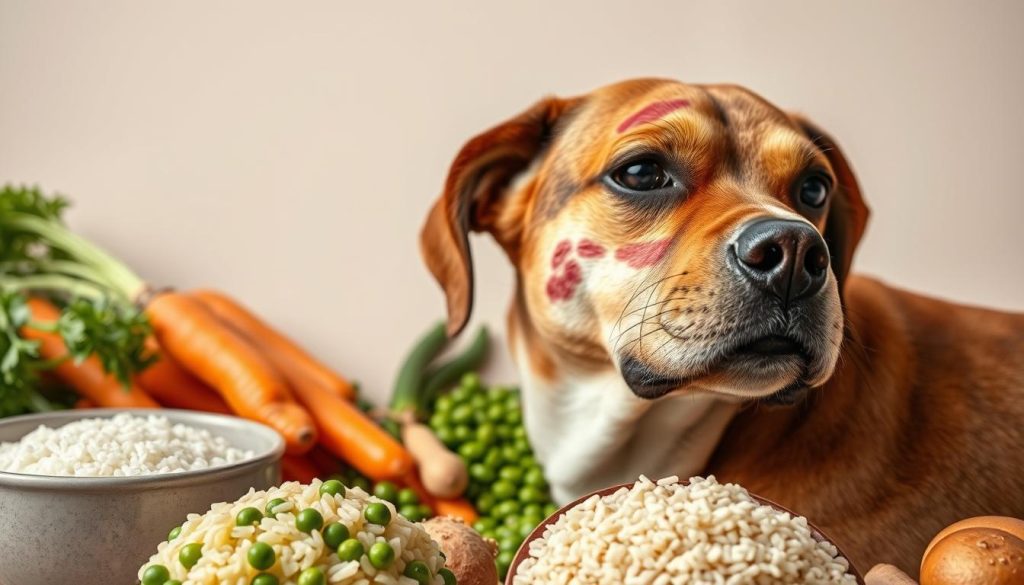
Choosing hypoallergenic dog food is a good start. These foods use proteins that dogs are less likely to react to. Hydrolyzed proteins are broken down, making them safer for your dog.
To figure out what your dog is allergic to, try an elimination diet. This means feeding your dog special food for two to three months. Then, you can slowly add new proteins to see if your dog reacts.
When changing your dog’s food, do it slowly. Sudden changes can make allergies worse. Vets often recommend special diets like Hill’s® z/d or Royal Canin® Hydrolyzed Protein for this.
Many over-the-counter dog foods claim to be safe but might not be. Always get a vet’s advice for a safe, hypoallergenic diet for your dog.
Preparing Homemade Dog Food
Preparing homemade dog food lets you control what your dog eats. It’s popular because you can avoid dog food recalls. It also saves money, costing less than fresh or raw dog food but more than kibble.
It’s important to make sure your dog’s homemade meals are balanced. A 15-lb dog needs at least 10% protein and up to 50% carbs. They also need 2.5-4.5% fiber and 5.5% fat. A 300-gram daily amount is needed, providing about 443 kcal.
Adjusting the ingredients based on your dog’s size and activity is key. For example, a 20-lb dog might need 8 ounces of turkey thigh and 2 tbsp organ meat. Add finely grated veggies, sunflower seeds, coconut oil, salmon oil, and Calcium Citrate. For bigger dogs, just multiply the ingredients.
Adding supplements like parsley, burdock root, zucchini, and cod liver oil can improve nutrition. Make sure to use recipes vet nutritionists approve. The American College of Veterinary Nutrition (ACVN) says essential nutrients are vital for your dog’s health.
But, making sure homemade dog food is balanced can be hard. A study in the Journal of the American Veterinary Medical Association found many recipes were lacking. Only 13 percent of dog owners kept their original recipe after a year, Tufts Cummings Veterinary Medical Center found.
To avoid problems, talk to a vet nutritionist. You can find them through the Diplomate directory at www.acvn.org or BalanceIT. Innovet Pet Products’ ChefPaw Dog Food Maker is also a good option. It makes fresh homemade dog food efficiently and ensures it’s nutritious.
Commercial Fresh Food Options
For dog owners who want convenience without sacrificing their pet’s health, commercial fresh food is ideal. These pre-made meals are made to fit the nutritional needs of various dog breeds and sizes. Brands like Hill’s Science Diet, Purina, and Royal Canin use quality ingredients that meet AAFCO standards. This ensures your dog gets the balanced nutrition they need.
Choosing the right dog food can greatly affect your dog’s health. Many dog food products now focus on sustainability and ethical sourcing. This shift makes it easier for dog owners to feel good about their choices.
These fresh dog food options also come with detailed nutritional info. This helps you make smart choices about your pet’s diet. Whether your dog has allergies or specific health needs, there’s a pre-made meal for them. By picking quality brands, you give your pet the best in fresh, nutritious meals.
Quick Recommendation: Our blog is filled with tip on the balanced nutrition dogs need. If you are seeking a source of food made with fresh, whole ingredients for your pet, click to see our #1 Recommendation
Transitioning Your Dog to Fresh Food
Switching your dog to fresh food should be done slowly to prevent upset stomachs. It’s best to take about 5-7 days for this transition. Start by mixing 25% fresh food with 75% of their current food on day one.
By day three, increase the fresh food to 50% and keep the old food at 50%. On day five, use 75% fresh food and 25% old food. By day seven, your dog should be eating 100% fresh food.
Dogs with sensitive stomachs might need a longer transition period. It’s important to watch how your dog reacts during this time. Signs of upset stomach or skin issues are not good.
If your dog shows signs of upset stomach after eating fresh food, see a vet. Use a fecal scoring chart to check their digestive health. Aim for a score of 3-4.
When changing your dog’s diet, watch their appetite and behavior closely. Some fresh foods don’t come with feeding guidelines. You’ll need to figure out the right amount based on kcal per cup or ounce.
Adding probiotics during the transition can help, too. Keep a close eye on your dog’s health for a few months. This ensures the fresh food diet is meeting all their nutritional needs.
Monitoring Your Dog’s Health and Weight
Keeping an eye on your dog’s health is key, even when introducing new foods. Regular vet visits help spot diet problems early. This keeps your dog healthy.
Watching your dog’s weight is also crucial. Adjusting food portions and types helps keep them at a healthy weight.
Regular diet checks can stop weight gain and health issues. Excess weight can lead to diabetes, arthritis, and high blood pressure. To help, try reducing food by 10% and increase exercise.
Adding veggies like green beans can help your dog feel full. Longer walks and more playtime also aid in weight control.
It’s okay for dogs to lose 1 to 3 percent of their weight each month. By watching their health and adjusting their diet, you can make them happier and healthier.
Conclusion
Understanding canine nutrition is key to improving your dog’s life. This guide has covered the basics, from nutritional needs to fresh food options. Now, you know how to give your dog a balanced diet for a happier life.
When choosing your dog’s diet, think about their specific needs and get vet advice. Regular vet visits help tailor your dog’s diet for better health. A diet full of whole foods and vitamins can prevent health problems and help them live longer.
Remember, keeping up with the latest in dog diets is important. Switching to fresh food is a big step towards your dog’s health. By paying attention to their diet, you’re not just feeding them. You’re caring for their overall health. With so many options, you can find the perfect diet for your dog.
Quick Recommendation: Our blog is filled with tip on the balanced nutrition dogs need. If you are seeking a source of food made with fresh, whole ingredients for your pet, click to see our #1 Recommendation