

Switching your dog to homemade food can change their life. With fresh, unprocessed ingredients, you’ll see big health improvements. Think about making meals with lean sirloin, brown rice, veggies, and eggs. Each adds special nutrients.
Commercial kibbles often have additives that harm your dog’s coat and energy. But homemade food gives your dog natural, healthy nutrients.
Many dog owners see better energy, coat, and health after switching to homemade food. You can join them in making your dog’s life better with homemade meals.
Quick Recommendation: Our blog is filled with tip on the balanced nutrition dogs need. If you are seeking a source of food made with fresh, whole ingredients for your pet, click to see our #1 Recommendation
Why Homemade Fresh Food is Better for Your Dog
Switching to homemade fresh food for your dog has many benefits. It lets you control what your pet eats. This means no harmful preservatives or unknown fillers found in commercial dog foods. Your dog stays healthier, avoiding risks from these additives.
Homemade dog food lets you tailor meals to your dog’s needs. Dogs need about 40 essential nutrients for good health. With homemade meals, you can ensure your dog gets exactly what they need. This helps prevent issues like obesity and allergies, making your dog healthier.
Also, making homemade dog food means using fresh, minimally processed ingredients. You can choose from raw, steamed, or baked foods. This variety keeps your dog excited about mealtime. It’s a big part of why homemade food is so good for them.
But, it’s important to make sure your homemade recipes are balanced. A vet or veterinary nutritionist can help. They ensure your dog gets the right amount of calories, proteins, fats, vitamins, and minerals. This keeps your homemade dog food from causing malnutrition or obesity, keeping your dog healthy.
Homemade dog food can also save money. For example, the ChefPaw machine makes cooking easier and cheaper. With some planning, homemade recipes can be healthier and more affordable.
Essential Ingredients for Homemade Dog Food
Making homemade dog food can greatly improve your pet’s health. It’s important to use the right ingredients to meet their nutritional needs. Let’s explore the key components for your dog’s diet.
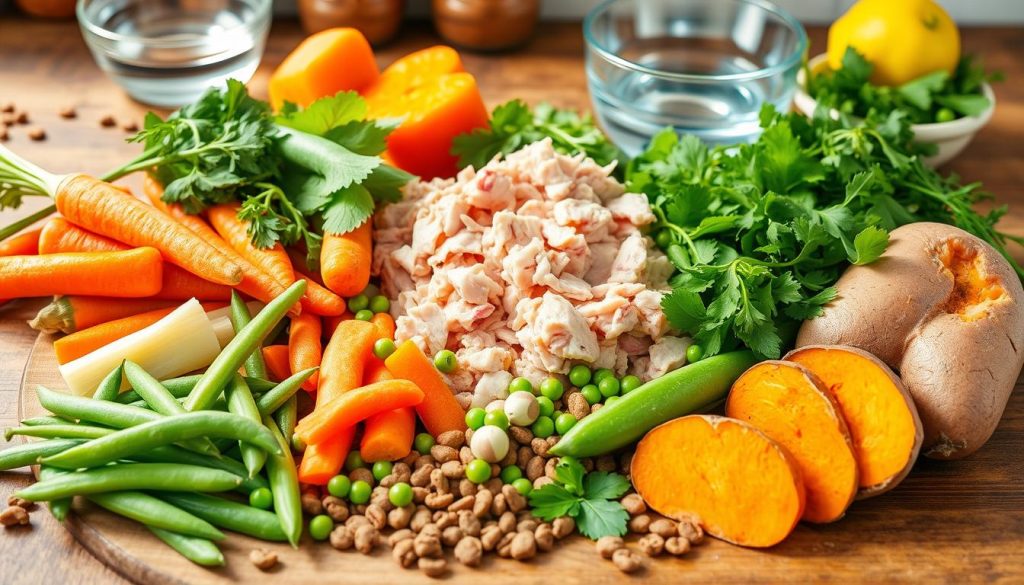
Protein is a must in homemade dog food. Ground beef, poultry, or liver are great for providing essential amino acids. The American College of Veterinary Nutrition (ACVN) says dogs need 10 specific amino acids.
Fats are also crucial. They provide energy and support bodily functions. Omega-3 and omega-6 fatty acids can be added with hempseed oil. Sardines or cod liver oil also offer vitamin E and D.
Carbohydrates and fiber from vegetables are important. Broccoli, red bell pepper, and spinach are full of antioxidants. They help with digestion. Grains like brown rice or quinoa add carbs and fiber.
Vitamins and minerals are key for your dog’s health. Eggs and eggshells are great for folic acid, vitamin B12, and calcium. Ground ginger provides manganese for connective tissue. Kelp powder ensures iodine for teeth and coat health.
Remember, not all human foods are safe for dogs. Avoid artificial preservatives, fillers, and toxic foods like garlic, onions, and chocolate. Sticking to safe dog food practices keeps them well.
If you’re starting homemade dog food, talk to a vet. They can help ensure your dog gets a complete and safe diet.
Homemade Dog Food: A Balanced Diet Plan
Creating a dog diet plan tailored to your dog’s needs is rewarding. Knowing the basics of balanced nutrition is key. This ensures your dog gets the best homemade meals.
A 15-pound adult dog might eat 80 grams of chicken, 190 grams of cooked rice, and 15 grams of mixed veggies. They also need 5-10 grams of vegetable oil for fats. Protein should be at least 10% of their diet, carbs up to 50%, fiber 2.5-4.5%, and fat no less than 5.5%.
More dog owners are choosing homemade diets. They like controlling what goes into their dog’s food, avoiding recalls. Homemade food might cost more than kibble but less than fresh or raw dog food.
It’s important to measure ingredients accurately for balanced nutrition. Use dietary gram scales until you know the volumes by heart. A 15-pound dog needs about 443 kcal daily. Recipes from Donna Kelleher, DVM, or MSPCA-Angell Animal Medical Center are great resources.
Finally, adding supplements like Balance IT Canine can prevent nutritional gaps. By following these tips, you can make a balanced diet plan. This ensures your dog stays healthy and happy.
How to Transition Your Dog to a Homemade Diet
Switching to homemade dog food should be done slowly to avoid upset stomachs. It’s best to take at least four days, but it might take longer depending on your dog’s comfort. A good approach is the “Two Week Transition,” where you mix old and new food over two weeks.
Begin by adding a small amount of homemade food to their regular diet. Gradually increase the homemade food while reducing their old diet. Keep the homemade food in the fridge for 2-3 days and then freeze it to keep it fresh. Label it with your dog’s name, cooking date, ingredients, feeding instructions, and any supplements.
Watch your dog’s stool closely during this time. It should be firm or normal. Any changes mean you might need to slow down the transition. Issues can come from too much fat, not enough fiber, too much organ meat, or hard-to-digest proteins. Adding a probiotic can help with loose stools. Look for one with the NASC Seal for quality.
Rotating your dog’s meals in the fridge helps keep them fresh and track feeding times. Using real foods like chicken, turkey, and fish can make your dog healthier and longer-lived.
By following these steps, you can smoothly transition your dog to homemade food. This will help adjust their diet to meet their needs and improve their health.
Easy and Nutritious Homemade Dog Food Recipes
Making homemade dog meals is fun and easy. Let’s look at some quick and healthy recipes for dogs of all sizes and ages. These recipes use a variety of ingredients to make sure your dog gets a balanced diet. You can use ground beef, organ meats, and butternut squash to make meals that meet your dog’s health needs, like for dogs with kidney issues.
One key recipe uses ground turkey as the main protein. This ensures your dog gets the amino acids they need. Start by browning one pound of ground turkey, which takes about 10 minutes. Then, add three types of vegetables: zucchini, spinach, and carrots, and cook for an additional 5-7 minutes. This recipe makes about six cups of food, with each serving having 22g of protein, 26g of carbohydrates, and 5g of fat.
Organ meats like liver, heart, and gizzards are great for your dog’s meals. They are full of iron, zinc, and vitamin B12, which boost your dog’s energy. For extra crunch and fiber, add broccoli and bell peppers. They are full of vitamins A and C and antioxidants.
Sardines and flax oil are excellent for omega-3 fatty acids, which are good for your dog’s skin and coat. Eggs are also great, providing choline and protein. Adding oysters gives your dog zinc and selenium. Leafy greens like spinach add vitamins K, calcium, and folate.
Cranberries are great for boosting your dog’s immune system and urinary tract health. A little ginger helps with inflammation and digestion. Use one tablespoon of coconut oil per recipe for fats. This makes a tasty and healthy homemade dog food recipe your dog will enjoy.
Storing your homemade dog meals is easy. Keep them in the fridge for up to five days or freeze them for up to three months. This way, your dog always has fresh, healthy meals. These recipes are a great way to improve your dog’s health and happiness.
Quick Recommendation: Our blog is filled with tip on the balanced nutrition dogs need. If you are seeking a source of food made with fresh, whole ingredients for your pet, click to see our #1 Recommendation
Precautions and Common Mistakes to Avoid
When making safe homemade dog food, knowing what to avoid is key. Good preparation tips ensure your dog gets the nutrients they need. Here are important things to remember:

First, don’t use toxic foods. Onions, garlic, grapes, raisins, chocolate, and xylitol are bad for dogs. Also, skip bones, raw meat, and uncooked eggs to avoid bacterial risks. Only use safe ingredients to keep your dog healthy.
Second, aim for a balanced diet. Dogs need proteins, carbs, fats, vitamins, and minerals. An unbalanced diet can cause health problems. It’s wise to get help from a vet or nutritionist. They can guide you on the right mix for your dog’s needs.
Another mistake is overfeeding. The Association of Pet Obesity Prevention says 56% of dogs are overweight. When switching to homemade food, it’s easy to overfeed. Use the right portion sizes based on your dog’s age, size, and activity level. This helps keep them at a healthy weight and avoids obesity-related issues.
Also, mix up your dog’s meals. A lack of variety can cause nutritional deficiencies and other problems. Try different proteins, veggies, and grains to keep meals interesting and nutritious.
Good hygiene is crucial to avoid foodborne illnesses. Always wash your hands and use clean utensils. Store food in airtight containers to prevent spoilage.
Finally, change your dog’s diet slowly. Sudden changes can upset their stomach. Gradually introducing new foods helps their digestive system adjust.
By following these tips, you can make safe homemade dog food. This will help keep your furry friend healthy and happy for years to come.
Veterinarian Advice on Homemade Dog Food
Switching to homemade dog food can be great for your pet’s health. But, it’s important to do it correctly. Your first step should be to consult a veterinarian. They offer crucial advice on making sure your dog’s homemade diet is balanced.
Seeking vet-approved dog food recipes is key to avoid nutritional deficiencies. The American Veterinary Medical Association (AVMA) found 95% of homemade dog food recipes lack the necessary standards. This shows why getting a vet’s advice is vital for a balanced diet.
Vets help you figure out the right portion sizes and calories for your dog. They consider your dog’s age, weight, breed, and how active they are. Regular vet visits and blood tests are also important to keep an eye on your dog’s health.
Adding calcium and vitamin supplements to homemade dog food is often necessary. Many meats and veggies don’t have enough calcium. A vet can guide you on how much and what type of supplement to use.
Vets also teach you how to safely prepare raw or cooked meals at home. Raw meat can be risky due to bacteria and stomach problems. Your vet will tell you how to handle food safely and might suggest cooked bones over raw ones.
Homemade dog food lets you choose the ingredients, which can help with allergies or digestive issues. By talking to a vet, you ensure your dog’s diet is safe and nutritious. This helps them do well on their homemade diet.
Benefits of Fresh Ingredients: From Meat to Herbs
Using fresh meats, vegetables, and herbs in your dog’s food can greatly improve their health. Meats like chicken, turkey, and lean beef are key for muscle health and energy. They make up about 75% of a balanced homemade diet.
Complex carbs, such as brown rice or oats, should be about 10% of their diet. They give dogs the energy they need for the day. Vegetables like carrots, green beans, and broccoli add about 15% to the diet. They are packed with vitamins and minerals.

Choose organic and seasonal veggies to get the best nutrition and avoid pesticides. It’s also important to balance these ingredients with vitamins and minerals. This ensures your dog gets what they need for their health.
Herbs like parsley can make dog food taste better and offer health benefits. Parsley helps with kidney health. Turmeric is good for dogs with arthritis because it reduces inflammation.
It’s key to mix up the ingredients to prevent allergies. Dogs with sensitivities might need to avoid common proteins. Fish or rabbit could be better options for them.
Raw veggies and fruits can be great snacks. They add nutrients and help keep teeth clean. But, make sure your dog’s food is well-balanced for their health and long life.
Inspiring Stories: Dogs Thriving on Homemade Diets
Homemade dog food has changed many pets’ lives for the better. Dog owners across the country share their stories. They talk about how their pets’ health and happiness have improved.
Hooch, a retriever, was diagnosed with stage 4 kidney disease in 2019. He started eating a homemade diet with quinoa, turnip greens, blueberries, and flaxseed. After two years, his kidney markers were normal. This shows how homemade food can work wonders for pets.
A common homemade dog food recipe includes 50% cooked protein like chicken or beef. It also has 25% raw veggies like broccoli and 25% cooked carbs like brown rice. Turmeric is often added for its anti-inflammatory benefits.
Max, a bulldog, got a better coat and more energy with coconut oil in his diet. Coconut oil helps with skin, digestion, and joint health.
These stories show homemade dog food can make pets more lively and healthy. It’s not just a trend. It’s a way to make pets happier and healthier with homemade meals.
Conclusion
Adopting homemade dog food can be a big change for your furry friend. You can tailor each meal to your dog’s specific needs. This way, you control the quality of ingredients and how much they eat.
This method can help with issues like obesity, allergies, and digestive problems, especially in older dogs.
Studies show more people are choosing homemade diets over commercial pet food. This is because homemade food offers better nutrition, digestion, and health for dogs.
However, there are risks to consider. Veterinarians often worry about nutritional deficiencies. Getting advice from an animal nutritionist is important, but it might cost up to $500.
Using supplements like Wellbeing Essentials Complete 22 can help make sure your dog gets all the nutrients they need.
Brands like Cola’s Kitchen provide balanced, home-cooked meals. These save time and ensure your dog gets all the nutrients they need. This is a good option for those who want homemade food but don’t want to spend a lot of time cooking.
In short, homemade dog food can greatly improve your dog’s life. With careful planning, vet advice, and quality ingredients, you can give your dog a nutritious and balanced diet.
Additional Resources and References
Exploring homemade dog food can be exciting. However, it’s important to know that only 13% of DIY dog diets are nutritionally complete. To make sure your dog’s food is balanced, you can use reliable resources.
Platforms like balanceIT.com and Tuft University’s Veterinary Medical Center’s Pet Foodology offer great guidance. Experts in pet nutrition can help you create a diet that meets all your dog’s needs. If you’re new, start by adding fresh ingredients to commercial dog food before switching to homemade.
It’s crucial to avoid mistakes like using raw meat or toxic foods like grapes and garlic. The University of California, Davis, found most dog food recipes lack essential nutrients. By following guidelines and getting professional advice, you can avoid these errors.
Using food scales to measure meat and cooking all animal products thoroughly is key. Regularly check your dog’s weight and visit the vet every six months to ensure their diet is working well.
By using these resources and following expert advice, you can give your dog the best nutrition. This will help them stay healthy and happy on a homemade diet.
Quick Recommendation: Our blog is filled with tip on the balanced nutrition dogs need. If you are seeking a source of food made with fresh, whole ingredients for your pet, click to see our #1 Recommendation