
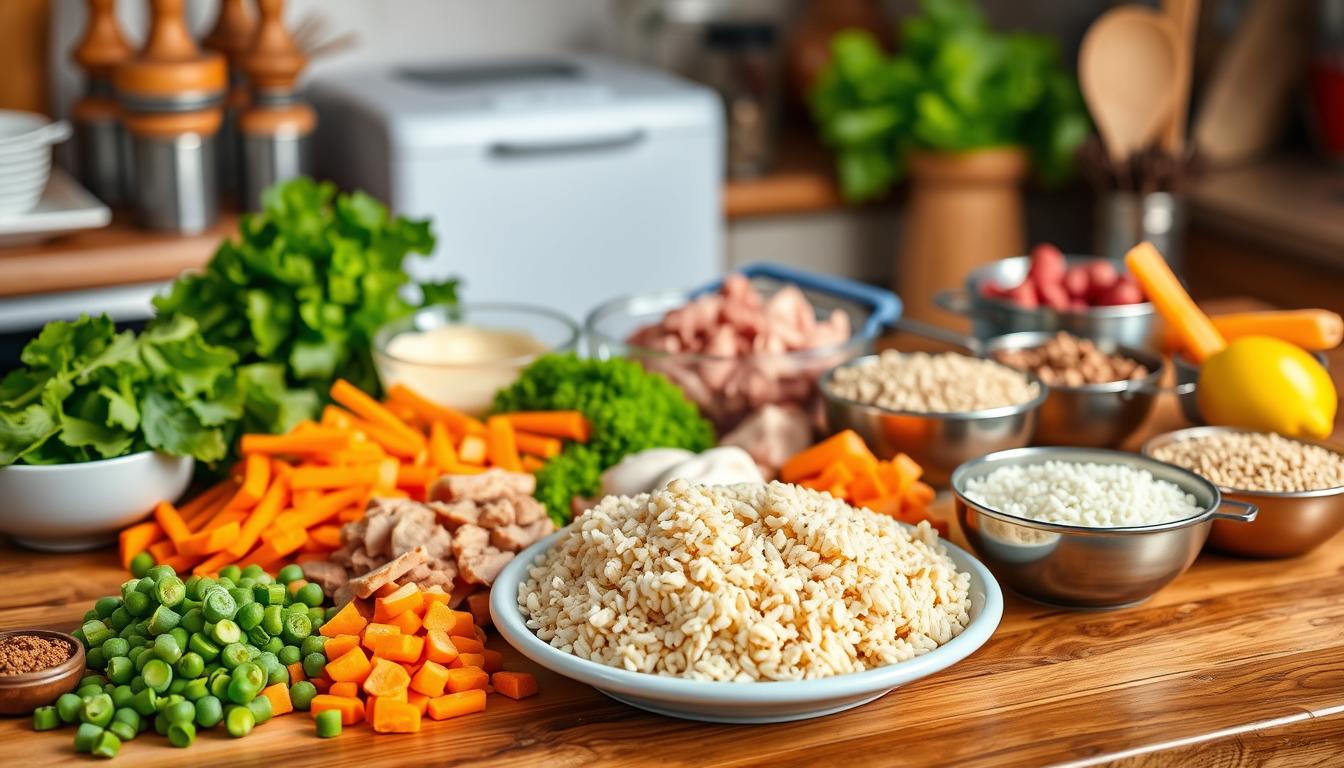
Starting your dog on fresh food can be a big step. It helps avoid bad stuff in commercial dog food. With fresh food, you control what your dog eats, leading to better health and a shiny coat.
A study found that most dog food recipes online are not complete. It’s key to focus on Canine Nutrition for your dog’s health. Fresh food is more digestible than dry food, making it a popular choice.
When preparing dog meals, remember that ingredients shrink when cooked. Meats lose weight, and fish can lose half. To ensure a balanced diet, talk to a vet or canine nutritionist.
This guide makes transitioning to fresh food easy. We cover safe ingredients and meal prep tips. Your dog will thank you.
Introduction to Fresh Food for Dogs
More dog owners are choosing homemade meals over commercial dog food. This is because of the growing number of pet food recalls. Cooking at home lets you avoid bad ingredients and make meals that fit your pet’s needs.
Knowing the right mix for homemade dog food is key. It should be 40% protein, 50% veggies, and 10% starch. This ensures your dog gets the nutrients they need.
Planning your dog’s diet is important. Switching from store-bought to homemade food should take 6 days to a week. Start with 20% new food and 80% old on day one. By day six, you should be using 100% new food.
Getting advice from a vet is crucial. They can help with portion sizes and supplements. This ensures your dog’s diet is balanced and healthy.
When making Healthy Dog Recipes, don’t use non-nutritional substitutes. Dr. Steph Sheen suggests choosing food that can be eaten in six to eight weeks. This prevents oxidation. Always store food and treats in their original containers at room temperature.
Batch cooking can save you time. Food can stay fresh in the freezer for up to a year if stored right. But, remember that after six months, some nutrients may be lost. It’s important to regularly weigh your dog to keep them at a healthy weight.
Essential Nutrients for Dogs
Ensuring proper *Canine Nutrition* is key for your dog’s health. Dogs need a *Balanced Dog Diet* to stay healthy. A good diet includes 40% protein, 50% vegetables, and 10% starch. Your vet can adjust these ratios based on your dog’s health needs.
Proteins are vital in a dog’s diet, with a minimum of 18% dry matter for adults and 22% for growing pups. Too much protein is not beneficial and should not exceed 30% dry matter. Adding a variety of vegetables ensures your dog gets important vitamins and minerals.
*Dog Diet Planning* also involves dietary fats. They are a concentrated energy source, offering more calories than proteins or carbs. The right amount of healthy fats boosts your pup’s energy and well-being.
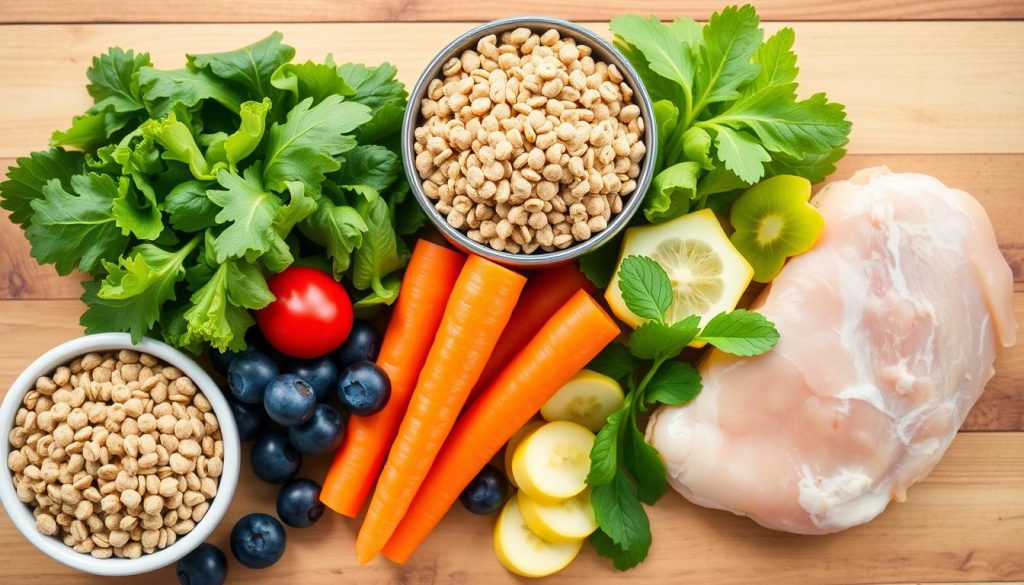
Many dog foods lack essential nutrients like iron, copper, calcium, and zinc. A pet nutritionist can help fill these gaps for a *Balanced Dog Diet*. Include vitamins from vegetables and cooked grains, beans, and starchy vegetables for safety and digestibility.
Your *Canine Nutrition* plan should avoid common allergens and toxic foods. Knowing that 85% of itchy dogs have insect bite allergies helps in customizing their diet. Regularly check their weight and health when on a homemade diet to keep them happy and healthy.
Safe Ingredients to Include
When making Healthy Dog Recipes, it’s crucial to use Safe Dog Ingredients. These ingredients help make balanced Homemade Dog Food. Lean meats like chicken, beef, and pork are great. They give your dog the amino acids and nutrients they need.
Seafood like shrimp and tuna, when fully cooked, are also excellent. Vegetables such as carrots and peas add vitamins and fiber. Carbohydrates like rice and potatoes give energy without being harmful.
Remember, all food should be plain. Avoid adding fats, salts, or seasonings as they can be bad for your dog. Fruits like apples and blueberries can be given in small amounts. Unsweetened peanut butter is a tasty treat. But, make sure fruits are seed-free to avoid choking hazards.
Using these Safe Dog Ingredients ensures your dog gets to enjoy tasty and nutritious meals. Homemade Dog Food made with quality ingredients helps keep your furry friend healthy and full of energy.
Ingredients to Avoid
It’s crucial to know which foods are bad for your dog. Some can be very harmful. Avoid chocolate, onions, garlic, avocados, grapes/raisins, and foods with xylitol or caffeine. Also, high-fat foods, salted nuts, and raw yeast dough are not good for them.
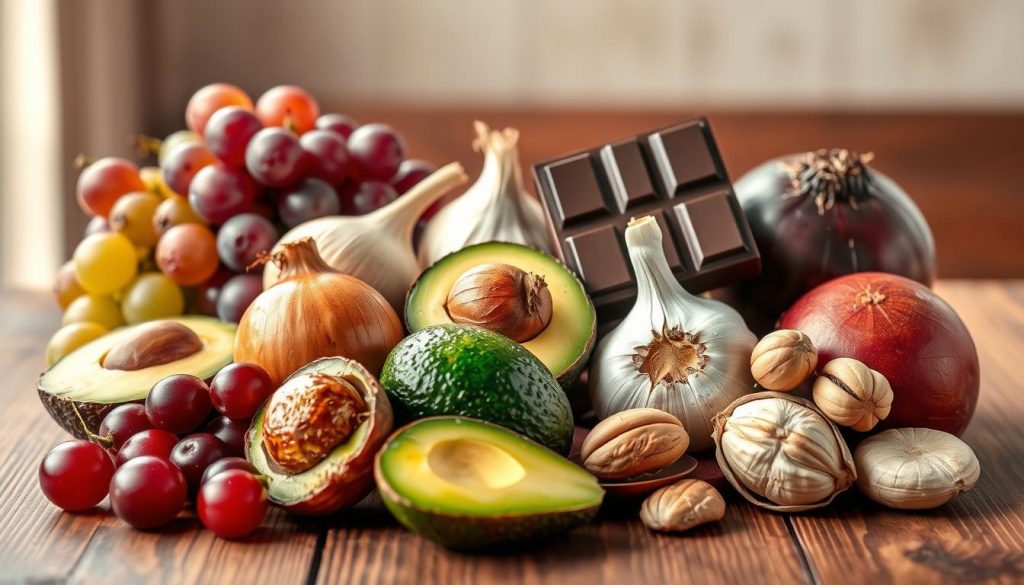
Knowing about these toxic foods can save your dog’s health. Chocolate, for example, has theobromine, which dogs can’t handle. Onions and garlic harm red blood cells, causing anemia. Grapes and raisins can even cause kidney failure.
Some additives and preservatives in dog food are also bad. BHA, BHT, and ethoxyquin can cause health issues. Always choose safe dog food by avoiding these.
Low-quality dog foods often have bad fats and harmful bacteria. Corn syrup and artificial colors can make dogs eat too much and cause allergies. Propylene glycol, dangerous for cats, can also harm dogs.
Learning about safe dog ingredients is key to your pet’s health. Choose natural, healthy foods to keep your dog safe and happy.
Customized Dog Meals
Keeping your furry friend healthy is key. Customized dog meals can make a big difference. Tailoring your pup’s diet to their needs, like age and health, is important.
For example, dogs with cancer might need more protein and less carbs. Overweight dogs might need fewer calories. Custom meals help meet these needs.
JustFoodForDogs offers personalized recipes for your pet. Their vets and nutritionists create diets just right. They also offer free nutrition consultations to help you choose.
Custom meals help with portioning, which is vital. Over 50% of dogs are overweight because of bad nutrition. Getting the right nutrients can prevent obesity and health problems.
Tailored diets start at just $1.06 per meal for Dachshunds. Many pets have lost weight and improved their health on these diets. Companies like Spot & Tango offer a two-week trial with a money-back guarantee.
Custom meals can improve your dog’s health in many ways. They support better organ function and a stronger immune system. They also help maintain a healthy coat and skin. Investing in a tailored diet is about caring for your dog’s health and long life.
Dog Meal Prep Tips
Efficient dog meal prep means planning and preparing meals ahead of time. Fresh food diets are up to 40% more digestible than dry food. This makes Dog Food Batch Cooking a smart choice. Start by figuring out your dog’s caloric needs and plan meals based on that.
Monitoring portion sizes is key to ensure your dog gets the right nutrients. This prevents overeating.
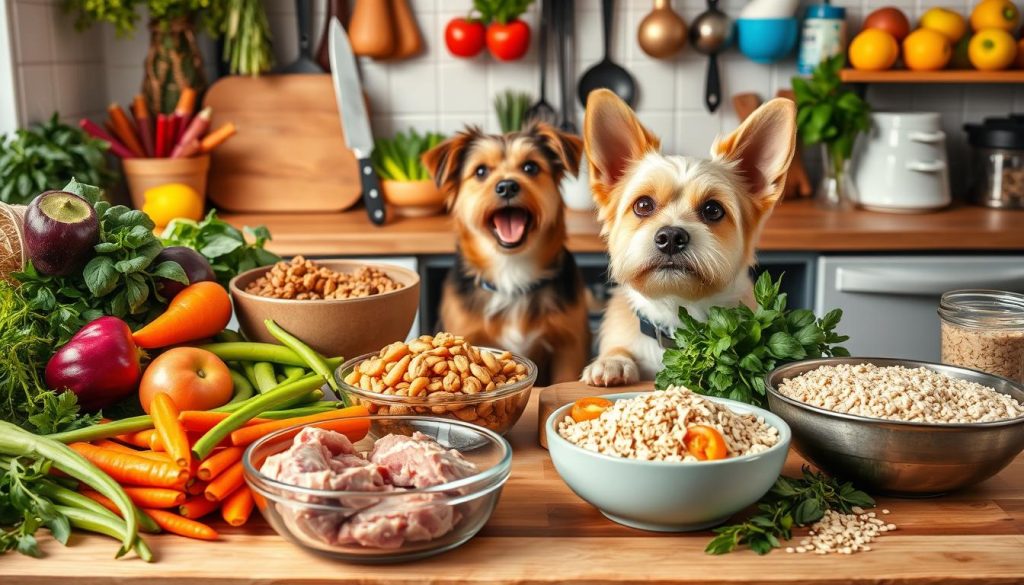
Meal prepping is great for dog parents with big breeds. They can prepare meals in large batches. This saves time and lets you control what your dog eats.
By doing Dog Food Batch Cooking, you ensure your pet gets a balanced diet. This is good for their health.
Frozen foods thaw in the fridge in about 24 hours for every 5 pounds. If you need it faster, thawing in cold water works too. Just change the water every 15-30 minutes, depending on the container size.
Using bulk ingredients for Dog Meal Prep can save money and reduce waste. It’s a smart way to shop.
Dogs need a variety of proteins like chicken, beef, turkey, and fish. Switching between these ensures they get all the nutrients they need. Quality storage containers keep meals fresh and prevent contamination.
By focusing on Dog Meal Portioning, you help your dog stay healthy and happy.
Transitioning from Store-Bought to Homemade
Starting a Dog Meal Transition is a great step for you and your pet. Studies show fresh food diets are 40% more digestible than kibble. This means your dog will get more nutrients and have fewer tummy troubles.
When you start a Dog Diet Change, do it slowly. Begin by mixing 10% of the Homemade Dog Food with 90% of the old food. Over seven days, increase the new food ratio gradually. This slow pace helps prevent upset stomachs and lets you spot any allergies or sensitivities.
Dogs on fresh whole foods from brands like JustFoodforDogs absorb more nutrients than on kibbles. So, switching to Homemade Dog Food can greatly improve your pet’s health.
But remember, patience is crucial. Watch your dog’s stool closely during the transition. If you see loose stools, adding a probiotic might help. Keep an eye on your dog for 3-6 months and consider bloodwork after four to six months to check if any diet changes are needed.
Finally, always mark the food with the cooking date and ingredients. This keeps the Homemade Dog Food fresh and safe. It should be stored in the fridge for 2-3 days and then frozen.
Maintaining Balanced Nutrition
It’s vital to keep your dog’s diet balanced for their health. Regular vet visits help adjust their diet as needed.
Home diets might miss out on important nutrients like calcium, B12, and zinc. Adding vitamins or minerals can fix this. Vets say treats should be no more than 10% of your dog’s diet to help with weight.
Watching your dog’s weight and health is key. Adult dogs need about 2% of their body weight in food each day. A mix of lean meat, organs, and veggies is best. Aim for 2/3 meat to 1/3 veg to meet their needs.
Getting the right mix of nutrients and checking with your vet often is crucial. It helps keep your dog healthy for a long time.
Incorporating Variety in Meals
Mixing up ingredients in your dog’s meals keeps them excited about eating. It also makes sure they get all the nutrients they need. By adding different proteins, veggies, and safe fruits, you make their meals tasty and healthy. This variety meets their nutritional needs and keeps them happy and healthy.
Changing up proteins like chicken, beef, and fish is good for your dog’s health. Fish, for example, has taurine, which is great for the heart. Adding veggies like carrots, spinach, and sweet potatoes gives them important vitamins and minerals.
Occasionally adding fruits like blueberries and apples adds antioxidants and fiber. But, make sure to avoid toxic foods like chocolate and grapes. Always check with a vet to make sure your dog’s diet is balanced. Tailoring meals to your dog’s age or health needs can also help a lot.
Being consistent and measuring meals carefully is key to a balanced diet. Adding 10% homemade food to 90% commercial dog food is a good way to mix things up. This approach helps manage the complexity of making balanced meals at home, leading to healthier dogs.
Conclusion
Switching your dog to fresh food can be very rewarding. Understanding what nutrients they need and choosing safe ingredients is key. This helps keep your dog healthy and happy.
Starting a homemade diet takes some effort. Getting help from an animal nutritionist can cost up to $500. But it’s worth it to avoid nutritional problems. Services like Cola’s Kitchen can also make things easier by providing balanced meals.
Online recipes can add variety to your dog’s meals. But, it’s important to check with a vet or nutritionist before trying new foods. Start small with meal prep and grow as you get more comfortable. Having plans and recipes ready can help you make healthy meals for your dog.