
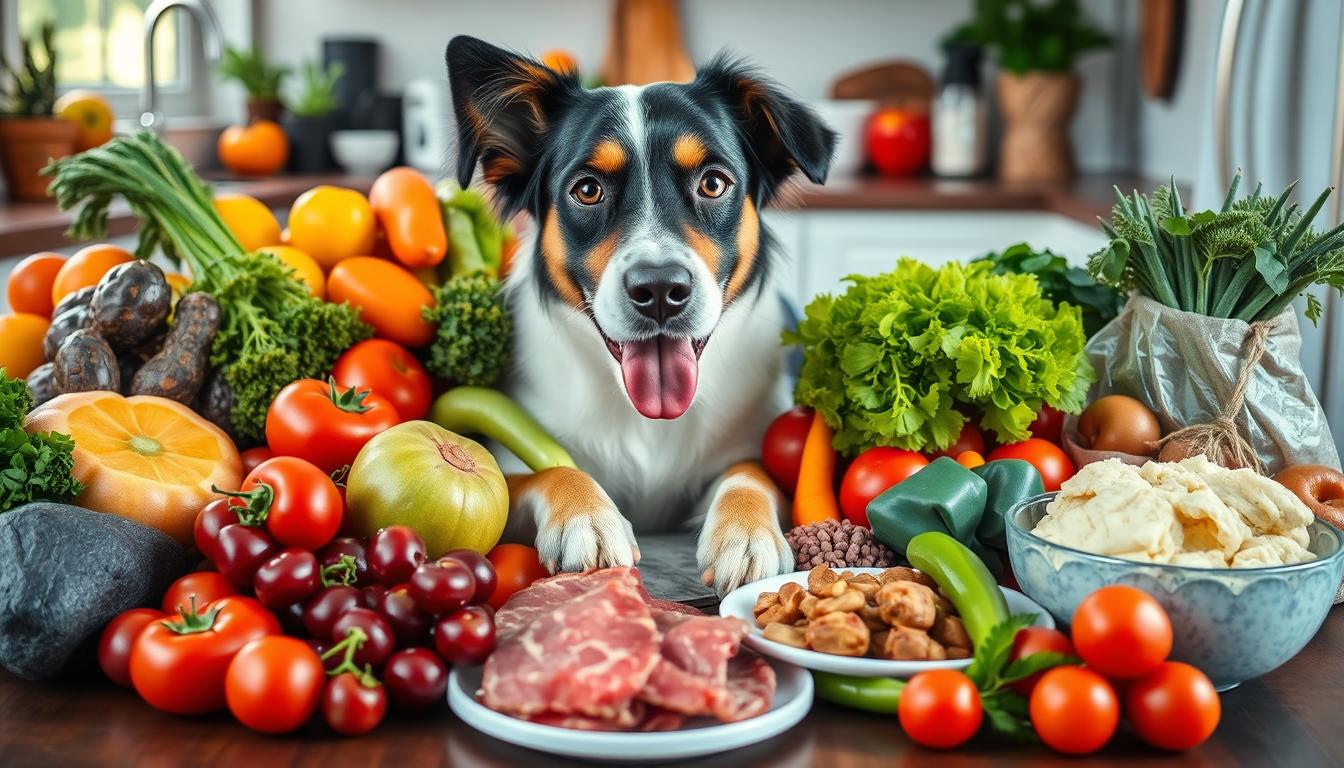
More people are choosing to feed their dogs fresh food. This is because commercial dog food can have additives and preservatives. A fresh food diet lets pet owners control what their dogs eat better.
This choice is also about avoiding food recalls and tailoring diets to each dog’s needs. It’s a way to ensure your dog gets the best nutrition possible.
Dogs need a mix of 2/3 meat and 1/3 vegetables in their diet. Feeding your dog homemade food can improve their digestion and make their coats shinier. It also means you have more control over what they eat.
However, dogs over 10kg need about 2% of their body weight in food each day. It’s important to watch how your dog reacts to new foods. Always talk to a vet to make sure your dog’s diet is balanced and complete.
Introduction to Fresh Food Diet for Dogs
In recent years, more pet owners are choosing homemade diets for their dogs. This change is partly due to concerns about commercial dog food recalls. It’s also because they want their pets to eat healthier.
By using whole foods, you can make sure your dog’s meals are free from harmful additives. Homemade diets are tailored to your dog’s needs, based on their breed, age, and health. This personalized approach can lead to better health and a longer life for your pet.
Home-prepared meals give you control over what your dog eats. You can adjust each meal to fit their unique dietary needs. This is especially helpful if your dog has health issues or special dietary needs. Plus, making healthy treats at home ensures your pet gets nutritious snacks.
Planning your dog’s meals also lets you get creative. You can try out different recipes that include proteins, veggies, and grains. This way, you can follow guidelines like the BARF diet, which includes 70% muscle meat and 10% raw bones.
Lastly, making your own treats means you can avoid allergens and processed foods. Giving your dog homemade treats is a great way to show you care about their health.
Why Choose Homemade Dog Food?
Homemade dog food gives you full control over what your pet eats. You can avoid foods that might cause allergies or sensitivities. This way, you can make sure your dog gets the right food for its health.
It can also save you money. High-end dog foods can be pricey. But, making your own food can be cheaper and still be of high quality. Plus, you can easily change your dog’s diet as needed, without waiting for new commercial foods.
But, remember, dogs need a balanced diet with about 40 essential nutrients. Homemade food that’s not balanced can lead to health problems. Always check with a vet or nutritionist to make sure your dog’s food is right.
Homemade meals can also make eating more fun for your dog. Even though it takes time and effort, the benefits of tailored nutrition and variety are worth it.
With homemade food, you can mix up ingredients to keep meals exciting. Just make sure to avoid dangerous foods like chocolate and grapes. Stick to recipes that are balanced and healthy for your dog.
Key Nutrients in a Balanced Dog Diet
It’s crucial to ensure your dog gets a balanced diet for their health. A good diet includes protein, fats, carbohydrates, and fiber. The AAFCO says dogs need at least 22% protein for growth and 18% for maintenance.
Dogs can’t make all amino acids on their own. They need 10 essential amino acids from their food. Too much protein, over 30% dry matter, is not beneficial.
Healthy fats are key for dog nutrition, offering more energy than carbs and proteins. Omega-3 and omega-6 fatty acids keep their coat healthy and balance inflammation. A balanced diet means fresher ingredients, smaller meals, and better nutrient absorption.
Fiber is vital for a dog’s digestive health. Vitamins and minerals like calcium, phosphorus, and magnesium are important for bones. Potassium, sodium, and chloride help with fluid balance. Dogs need over 18 minerals, with seven in higher amounts for health.
Adjusting the diet for your dog’s age, weight, and activity is essential. Adding dog dietary supplements can help fill nutritional gaps. Whether homemade or commercial, focusing on balanced nutrition leads to a healthier coat and fewer health problems.
Consulting with Veterinarians and Nutritionists
Before changing your dog’s diet, it’s key to talk to a vet or a vet nutritionist. They know a lot about animal nutrition and can make a diet just for your pet. Vets who specialize in nutrition have a lot of training and can give your dog the right food and supplements.
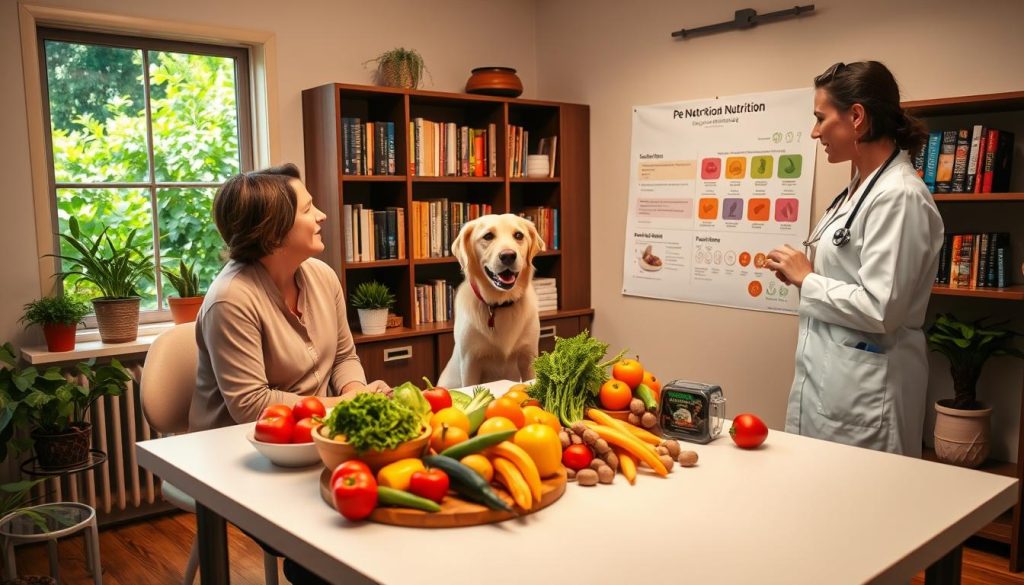
Seeing a vet nutritionist regularly is important. It helps keep your dog’s diet right as they get older or if their health changes. You’ll talk about your dog’s health, what they need to eat, and how to make their diet better.
Places like Cornell University Hospital for Animals offer these services. They work with different teams to make diets that help your dog stay healthy. They can even help with serious health problems like liver and bladder stones.
When you meet with a vet nutritionist, you’ll fill out forms about your dog’s diet and health. This helps you have a good talk about making a diet that’s just right for your dog. It’s important to keep talking and making changes as needed to keep your dog healthy.
Essential Tools and Ingredients for Homemade Dog Food
Making homemade dog food is more than just mixing ingredients. It’s about using the right tools and picking healthy ingredients. You’ll need a few key tools to make it easy and efficient. A food scale is crucial for measuring ingredients correctly, so your dog gets the right nutrients.
A food processor is also a big help. It saves time by chopping and blending ingredients quickly.
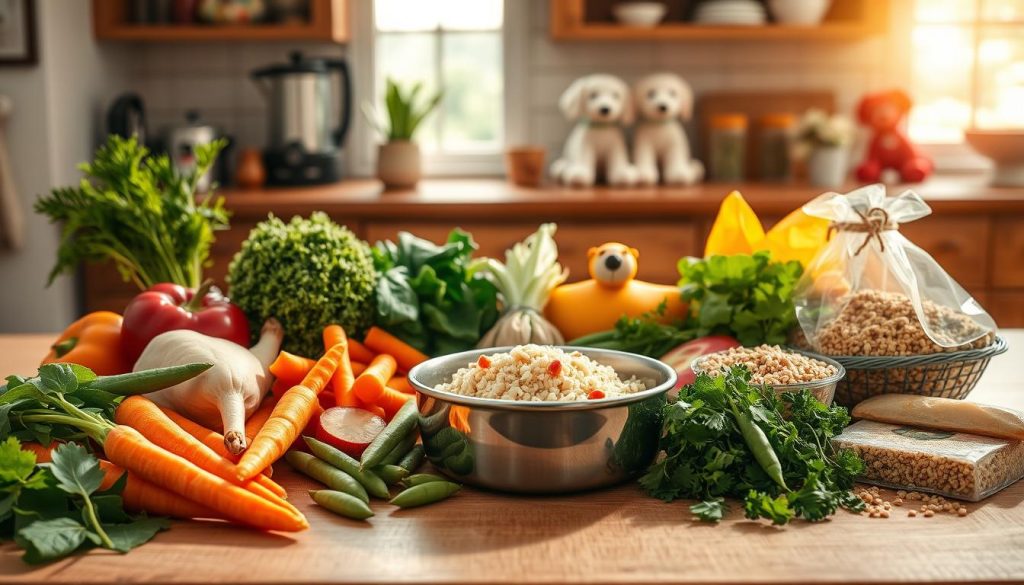
It’s also important to have good storage containers for freezing or refrigerating dog food. This keeps the meals fresh and safe for your pet. For protein, lean ground beef, chicken, turkey, and pork are good choices.
Grains like brown rice, oats, and quinoa add carbs to your dog’s diet. Vegetables such as shredded carrots, peas, green beans, and sweet potatoes are great for their health benefits. A little curly parsley can help your dog’s kidney health.
Remember, measuring ingredients accurately and storing food properly are key. The right tools and healthy ingredients ensure your dog gets a balanced, nutritious diet.
Dog Diet Plan: Creating a Custom Meal Plan
Your dog’s diet should be as unique as your pup. You can tailor their diet to their size, age, and activity level. This approach helps with weight management, health issues, and improving coat and skin health.
Start with vet-approved recipes, like those from JustFoodForDogs. Then, adjust portions and ingredients to fit your dog’s needs. For example, Wolfgang lost weight with a custom plan, and Bear slimmed down with a Turkey & Whole Wheat Macaroni Recipe.
Health improvements are significant. Lady improved with Hemolytic Anemia on a custom diet, and Baloo’s health improved with JustFoodForDogs. Even skin allergies can be managed, as seen in Bruno’s case.
Veterinary teams, including Dr. Vincent Michels, ensure balanced diets. They work with certified formulators to create meals. Each diet is hand-packed and delivered based on health needs.
You can schedule deliveries as needed. Free nutrition consultations help find the best diet for your pet. Dr. Elena Fernandez also creates custom meal plans to meet all nutritional needs.
Meal plans are priced by weight in grams, with various portion sizes. Plans can be full portions or top-ups. There’s a 30-day money-back guarantee if your dog doesn’t like the meal.
Adding superfoods like Bonza supports overall health. The transition should be gradual over ten days. Subscribers can adjust their meal plans, skip deliveries, or cancel as needed.
With thorough dog meal customization and planned dog diets, your furry friend can enjoy a healthy, balanced, and delicious diet every day.
Preparing and Storing Homemade Dog Food
When making dog meals, it’s crucial to cook the food well. This step gets rid of harmful germs. After cooking, let the food cool down completely before storing it in airtight containers. This keeps the food fresh and full of nutrients.
Homemade dog food can stay in the fridge for three to four days. If you need to keep it longer, freezing is a great choice. Most recipes can be frozen for three to six months. Always label the containers with the date so you know when to use them.
To serve the food, thaw it in the fridge. Don’t let it sit at room temperature to avoid bacterial growth. Remember, once thawed, you can’t refreeze it. Any leftover food should be thrown away to keep it safe.
Using these tips, you can give your pet fresh, healthy meals every time. Always talk to a vet nutritionist to make sure your dog’s diet is right for them. This ensures they get all the nutrients they need.
Monitoring Your Dog’s Health and Weight
Watching your dog’s weight is key for their health. Regular vet visits are important for managing their weight. These visits help make sure their homemade diet is right.
Changes in weight, coat, or energy can mean the diet needs tweaking. Too much weight can lead to serious health issues. These include diabetes, heart disease, and cancer.
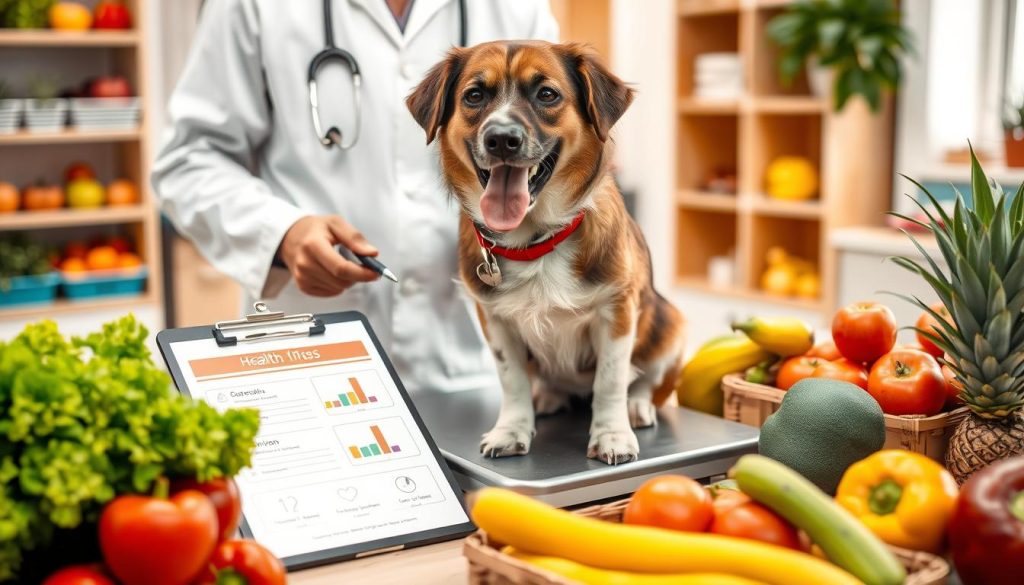
Vets can tell you how many calories your dog needs. They consider age, weight, and activity level. They might suggest special foods to help with weight loss.
Changing to a new food should be slow to avoid stomach problems. Regular health checks and diet adjustments are crucial for your dog’s health.
Adjusting the Diet Based on Your Dog’s Needs
As your dog ages or their health changes, it’s key to adjust their diet. Senior dogs often need fewer calories because they move less and their metabolism slows down. Vets suggest limiting treats to 10% of their diet to help with weight loss.
Keeping an eye on your dog’s weight is important. Dogs who are overweight or obese live 2 or more years less than those who are fit.
Adapting diets is crucial for managing health issues like pancreatitis. Dogs with this condition need a diet low in fat and protein. Human foods can add up to 20% of a dog’s calories, which can be bad for their health.
Adjusting the diet means balancing proteins, fats, and carbs. This ensures your dog gets the nutrients they need.
Responsive feeding also means adding supplements as needed. It’s important to keep calcium, B12, zinc, and magnesium levels right, especially with homemade meals. Start new foods slowly, mixing 75% old diet with 25% new over 3 to 4 days.
Regularly check and adjust your dog’s diet based on their age, activity, and health. Puppies need 22-32% protein and 8-20% fat for growth. Senior dogs might need supplements like glucosamine and chondroitin for joint health.
By making these changes, you can help manage your dog’s weight and health. This ensures they stay happy and healthy at every stage of their life.
Conclusion
Feeding your dog a balanced, fresh diet greatly improves their life quality. Understanding their nutritional needs is key. This helps prevent diseases like cancer and diabetes.
It’s important to mix proteins, carbs, fats, and vitamins in their diet. This keeps them healthy overall.
Homemade dog food can make their skin and coat healthier. It also helps with digestion, keeping them active and happy. A good diet can even make them live longer and happier.
Working with vets and nutritionists is crucial. You should watch your dog’s health and adjust their diet if needed. Tailor their diet to their breed, size, and activity level.
By focusing on a nutritious diet, you’re investing in your pet’s long-term health and happiness. This sets them up for success and a happy life.