
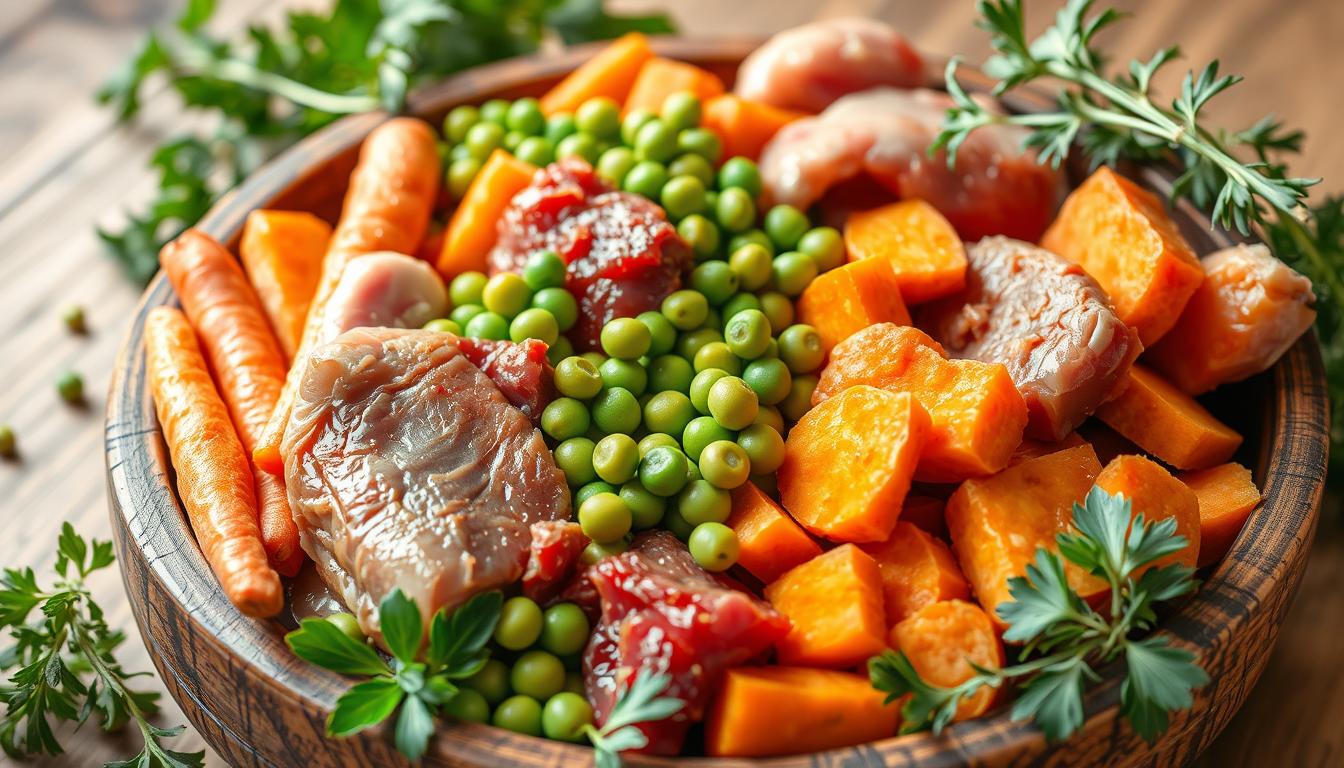
Feeding your dog fresh food is becoming more popular. People worry about the quality of commercial pet food. This guide will help you understand fresh dog food, including the best options and recipes.
Brands like Hill’s, Purina, and Iams follow strict nutritional standards. But, homemade meals are safer and healthier. You can make meals with lean meats, veggies, and grains that are better than commercial food.
This guide will show you why fresh dog food is great. It covers its benefits, nutritional needs, and more. It ensures your dog gets all the essential nutrients for a balanced diet.
Why Choose Fresh Food for Dogs?
Choosing fresh food for your dog has many benefits. It tastes better and is more nutritious. Fresh dog food is full of B vitamins and omega-3 fatty acids. These nutrients help keep your dog healthy and happy.
Fresh dog food makes your dog’s stools smaller and firmer. It also helps with digestion. Dogs on fresh food have shinier coats and less shedding. This is great for dogs with allergies because you can control what they eat.
But, fresh dog food needs careful handling to stay safe. It costs more and takes more time to prepare. A vet can help make sure your dog gets all the nutrients they need.
Many pet owners see big improvements in their dog’s health with fresh food. Pet insurance shows that a good diet can save money on vet bills. Switching to fresh food can boost your dog’s energy and overall health.
Understanding Your Dog’s Nutritional Needs
Dogs need a balanced diet like humans do. This includes proteins, carbs, and veggies. The right mix is about 40% protein, 50% veggies, and 10% carbs. A balanced diet is key to your dog’s health.
Proteins, fats, vitamins, and minerals are all important. They help your dog stay healthy. Following these guidelines helps meet your dog’s nutritional needs.
Every dog is different. Their diet should match their age, breed, and how active they are. Puppies, adult dogs, and seniors all have unique needs. A balanced diet is crucial for their health.
AAFCO sets standards for dog food. But, about 25% of owners don’t get vet advice on their dog’s diet. This might mean missing out on important nutrition.
Dogs need the right amount of calories each day. The formula is 30 x weight in kg (or pounds divided by 2.2) + 70. Most adult, indoor dogs need less than 350 calories per cup to stay healthy.
Feeding once or twice a day is best. Some dogs do better with two or three meals. Make sure their diet matches these guidelines for a balanced diet.
Different breeds have different needs. Obesity is a big problem, with 56% of dogs in the US being overweight. Watching your dog’s food intake and getting vet advice can help. This ensures they get the right diet for their health, age, and activity level.
The Benefits of Fresh Food
Switching to fresh food for your dog can bring many benefits. Fresh pet food is packed with nutrients, unlike kibble. It has fewer calories and more nutrients, improving your pet’s health.
Fresh dog food avoids preservatives, giving your dog pure nutrition. This means no harmful chemicals. It also tastes better, making mealtime more enjoyable for your pet.
Homemade diets let you control what your dog eats. They can be tailored to your dog’s needs, with a vet’s guidance. This is a big plus over kibble or canned food.
Dogs on fresh diets live longer, studies show. They get healthier food, with no additives. Services like The Farmer’s Dog and Nom Nom make sure the food is right for your dog.
Fresh food also boosts your dog’s mental health. It makes mealtime more fun and satisfying. This strengthens your bond with your pet.
Some breeds benefit greatly from fresh food. For example, Scottish terriers eat less cancer when they eat veggies. This shows why fresh food is becoming more popular.
More people are choosing homemade diets or fresh food services. This shows they care about their dog’s health. Fresh food is becoming a top choice for many pet owners.
Homemade Dog Food Recipes
Cooking DIY dog food recipes at home lets you control what your dog eats. You can use quality proteins like chicken, beef, and lamb. Add in veggies like carrots, green beans, and carbs like rice and potatoes for a complete meal.
Making DIY dog food recipes requires careful planning. Avoid foods that are bad for dogs, like onions and garlic. Use fats wisely and don’t overdo it with seasonings. Each dish should have the right mix of proteins, carbs, fats, and vitamins.
For instance, a Chicken & Rice Dinner is a tasty, healthy option. It combines chicken, brown rice, and mixed veggies. Another choice is the Turkey & Quinoa Delight, which pairs lean turkey with quinoa and veggies for a protein-rich meal.
Cooking for your dog can help avoid additives in commercial pet foods. Ingredients like potassium sorbate and ethoxyquin can be harmful. Fresh, clean ingredients are key for many pet owners.
Before starting with DIY dog food recipes, talk to a vet or animal nutritionist. They can adjust the recipes for your dog’s needs, like weight, age, and activity level. Sometimes, adding vitamins and minerals is needed to keep your dog healthy.
Transitioning to Fresh Food
Switching to fresh dog food needs a careful plan to avoid digestive problems. Start by mixing 75% old food with 25% Freshpet for the first three days. This slow start helps your dog adjust.
For days four to six, mix 50% old food with 50% Freshpet. This balance helps your dog’s body get used to the new food gradually. Then, from days seven to nine, use 75% Freshpet and 25% old food.
By days ten to twelve, your dog should be eating 100% Freshpet. Keep an eye on your dog for any signs of upset stomach or changes in appetite. Adjust the transition if needed, especially for dogs with sensitive stomachs or health issues.
Every dog is unique, and their dietary needs differ. Talking to your vet can help tailor the transition to your dog’s needs. Switching to fresh dog food can greatly improve your dog’s health and happiness.
Top Fresh Dog Food Brands in 2024
Looking for the best dog food brands in 2024? Check out JustFoodForDogs and Nom Nom. They are known for their fresh, high-quality pet food that meets strict nutritional standards.
JustFoodForDogs Fresh Frozen Dog Food was named the top fresh dog food brand in 2024. It was tested against six other popular brands. They offer six recipes, three of which include grains, following WSAVA and AAFCO guidelines. Their meal plans start at just $2.20 per day, and they can customize diets for your dog’s needs.
Nom Nom Fresh Dog Food is known for its four recipes and easy-to-serve meals. Like JustFoodForDogs, Nom Nom follows WSAVA and AAFCO guidelines for balanced nutrition. Meals start at $2.40 per day, and they offer a 30-day money-back guarantee and a sampler box.
The Farmer’s Dog offers fresh food with 39% protein, great for active dogs. Ollie Dog Food and A Pup Above also offer high protein content. Freshpet Vital is more affordable, with a 49% protein recipe.
Raised Right Adult Beef recipe is a 5-star rated food, perfect for large breed dogs. Open Farm and Viva Raw offer premium options starting at $3 and $5 per meal. The Honest Kitchen, Maev, and PetPlate also offer quality meals starting at $5 and $2 per meal. Nom Nom’s meals start at $3, making it a top choice for 2024.
Mixing Fresh and Commercial Dog Food
Combining fresh and dry dog food is a great way to feed your pet. It mixes the benefits of commercial food with fresh ingredients. This mixed diet for dogs makes meals more appealing and nutritious.
Dogs often do well on fresh foods, but some might have digestive problems. Start by adding 20% fresh food to their kibble. This helps them adjust. If you add more than 20%, talking to a dog nutritionist is a good idea.
Animal proteins should be the main part of your dog’s diet. Canned fish like sardines and salmon are good. Raw liver, heart, and eggs are also great. Vegetables can be part of the diet, but make sure they’re pureed.
Garlic can help keep fleas away and is healthy in small amounts. But be careful not to give too much. Canned pumpkin helps with digestion and can prevent diarrhea and constipation. Cook grains and starchy vegetables to make them easier for dogs to digest.
Fresh food and kibble digest at the same rate in the stomach. Mixing them might upset some dogs’ stomachs. But, a slow transition can help, as dogs’ stomachs can handle different foods well.
Feeding your dog fresh foods as toppers to kibble is a fun way to mix things up. You can also start with fresh foods and add kibble later. Rotating between kibble and fresh food keeps meals interesting and balanced.
Here’s an example of a daily meal plan: tinned salmon, liver, eggs, green veggies, kefir, and bone broth with kibble. This mixed diet for dogs makes meals more exciting and ensures they get all the nutrients they need.
Dog Food Guide: Making Balanced Fresh Meals
Making balanced meals for dogs is more than just mixing ingredients. It’s important to know the nutritional value of each part. A good meal should have the right mix of proteins, carbs, fats, vitamins, and minerals.
A favorite recipe might include 7 lbs of lean ground beef, 1.5 cups of hempseeds, and 16 oz of canned sardines. It also has 4 teaspoons of cod liver oil, 8 eggs, and 15 oz of pumpkin puree. Plus, it adds a mix of veggies like broccoli, spinach, and red bell peppers. This mix gives dogs a variety of nutrients.
For two small adult dogs, about 10 lbs each, feed 2/3 cup twice a day. This gives them around 40 calories per ounce. The recipe makes about 11-12 lbs of food, enough for nearly 3 weeks for two 10 lb dogs.
Keep uncooked food in the freezer for longer and in the fridge for a few days. Cooked food should not stay in the fridge more than 4 days.
These recipes are trusted by over 20,000 vets worldwide. They are 100% FDA & AAFCO compliant. They ensure dogs get the nutrients they need, making healthy eating easy and hassle-free.
Addressing Food Allergies in Dogs
Food allergies in dogs can cause a lot of discomfort. Symptoms include skin issues and stomach problems like diarrhea or vomiting. These allergies are common in dogs, affecting many of them.
It’s important to find out what foods cause these allergies and remove them from your dog’s diet. Common culprits include chicken, beef, dairy, wheat, and lamb.
Vets often suggest an elimination diet trial to manage allergies. This trial lasts 8 to 12 weeks. During this time, all suspected allergens are removed, and a special hypoallergenic dog food is given.
This special food uses proteins that are less likely to cause an allergic reaction. There are different types of hypoallergenic diets, including veterinary and home-prepared options.
Dogs with food allergies might also get ear infections, affecting about 50% of them. Around 30% of dogs, especially puppies, may have stomach issues like diarrhea or vomiting. It’s important to watch for new allergies in dogs with diagnosed food allergies.
Some breeds, like Boxers and Labrador Retrievers, are more likely to have food allergies. While there’s no cure, removing allergens and keeping to a hypoallergenic diet can help. This way, you can make your dog’s life better and happier.
Organic vs. Non-Organic Fresh Dog Food
Choosing between organic and non-organic dog food is important. Organic food is made without synthetic pesticides or fertilizers. This means your dog might be less exposed to harmful chemicals.
Organic dog foods come in three types. Each type has different rules about what ingredients can be used:
100% Organic: This food is made from only USDA-certified organic ingredients. It has the USDA certified organic seal on it.
Organic: This food has at least 95% organic ingredients. It can also have up to 5% non-organic ingredients from a special list.
Made with Organic Ingredients: This food has at least 70% organic ingredients. The other 30% must follow strict rules. Up to three specific ingredients can be labeled as organic.
Organic dog food is pricier than non-organic food. It costs more because of higher production costs and smaller farms. But, it doesn’t have pesticides, synthetic fertilizers, GMOs, ionizing radiation, or antibiotics.
Organic dog food might have health benefits like less chemical exposure. But, the AAFCO makes sure all dog foods, organic or not, have the nutrients they need. Even though there’s no clear proof organic food is better, choosing natural pet foods can still be good for your dog’s health.
Fresh Food for Different Life Stages
It’s key to know about life stage canine nutrition for your dog’s health. Puppies need lots of protein, fat, and the right calcium and phosphorus for bones. Small breeds are puppies until about 12 months, medium to large breeds until 12-18 months, and giant breeds until 18-24 months or longer.
When dogs grow up, their diet changes. Adult small breeds are adults from 1 to 7 years, medium breeds from 1 to 6 years, and large breeds from 1 to 5 years. Their diets should have 18-25% protein, 10-15% fat, and 30-70% carbs, depending on their activity and needs.
Senior dogs have special needs too. Senior small breeds are seniors around 7-9 years, medium breeds around 6-8 years, and large breeds around 5-7 years. They need enough protein to keep muscles strong. They also benefit from joint health supplements like glucosamine and chondroitin, and easy-to-digest foods.
Choosing the right fresh food for your dog’s life stage is important. It ensures they get the right nutrients for their age and size. Tailoring their diet to support growth or health in older age can greatly improve their life. Always talk to your vet to make sure your dog’s diet is perfect for every stage of life.
Storage and Handling of Fresh Dog Food
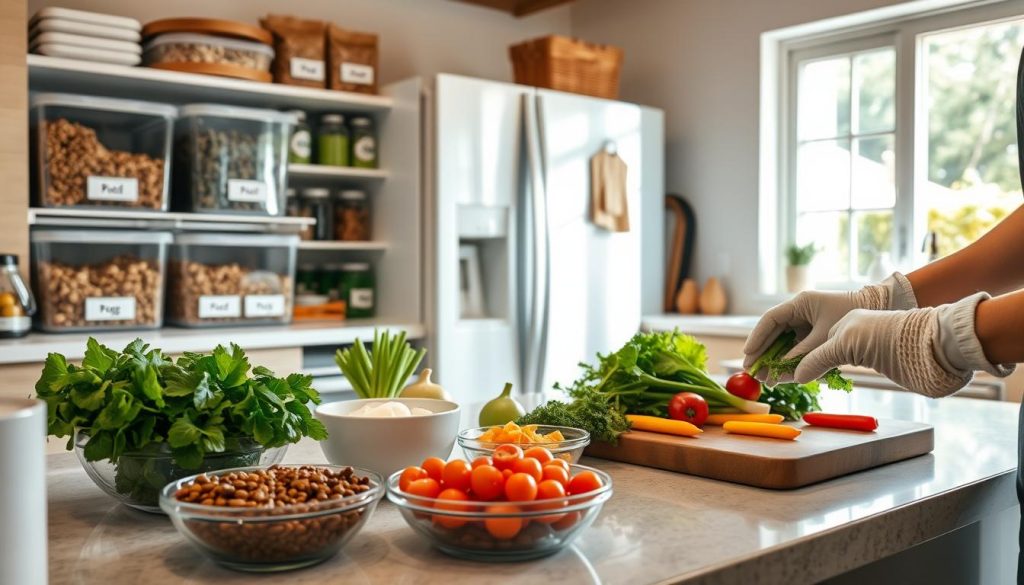 Keeping fresh dog food safe and nutritious is key. Always refrigerate fresh or unused canned food at 40°F or lower. Treat fresh food like human food to avoid spoilage and contamination.
Start by storing dry pet food and unopened canned food below 80°F. This helps prevent nutrient loss. Discard canned food left at room temperature after four hours to avoid contamination. Opened canned food should be stored in the fridge and used within seven days.
Safe handling of pet food means washing and drying bowls and utensils often. Use separate scoops and measures for pet food. Wash dry food bowls weekly with hot, soapy water. If you notice foul odors or swollen containers, tell the FDA and the manufacturer right away.
Protecting fresh dog food from pests is also important. Use plastic, glass, or metal bins for dry food. Following these steps keeps your pet’s food fresh and safe. Choose products with the longest expiration date for the best quality. Reputable pet food makers often offer a money-back guarantee, ensuring quality and satisfaction.
Conclusion
Exploring fresh food for dogs can really boost your pet’s health. It’s key to pick dog food that fits your dog’s needs. Each food type, like dry, wet, or raw, has its own benefits and risks.
Dog diet tips say to mix proteins, whole grains, fruits, and veggies for a balanced diet. Healthy fats, like omega-3s, keep your dog’s coat and skin in top shape. Homemade food gives you control but needs careful nutrient balance to avoid health problems.
Start any new food slowly to ease your dog’s digestive system. This helps them adjust better.
When it comes to canine nutrition, a balanced diet is crucial. It should have at least 18% protein and about 5% fat for energy and skin health. Try different brands like Aflora Grain Free, Canagan, and Symply to find the best fit for your dog.
Watch how your dog reacts to new foods and adjust portions based on their size, age, and activity level. This ensures they get the diet they need. Choosing fresh food options can make your dog’s life vibrant and healthy.